Author: Sameer Ahuja

  • 11 Tools That Can Help You Achieve Your Health and Fitness Goals

    11 Tools That Can Help You Achieve Your Health and Fitness Goals

    Despite being rational humans, we don’t always act in our own best interest. We know we should eat certain foods to look good, feel good, and get healthier, but often succumb to junk food that tastes good in the moment but makes us feel worse in the long term. We know getting to bed before 10 pm makes us perform better the next day, but it’s fun to stay up late. This is the human experience: the push and pull between our rational higher minds and what feels good in the moment. This is most evident in our relationship to working out.
    Working out is hard. It’s work. We are applying intense stress to our bodies and getting uncomfortable enough that the body’s only response is to get stronger, faster, and to adapt to the stress. That’s what makes it work, but it’s also what makes it hard to do: it’s not “fun” in the purest sense of the word. There’s pain, sweat, and grueling effort. Hardest of all, we have to want to work out . Most of us can’t get fit through daily living. We work in offices, sit at desks, drive in cars. We aren’t hunting, gathering, exploring, climbing as part of our daily lives anymore. It’s a choice we must make.

    Today, I’m going to list a number of  tools (low- and high-tech) and techniques to help making the right choice easier. Whether we like it or not, we don’t always do what we know we should—myself included—so this post is for all of us. Here are eleven tools and tips that will give you that little nudge you need to stay on track and do what’s best for yourself.
    Set a Goal
    A lot of people fail because they never even set a goal. Now, a goal can be almost anything. You can aim for a certain amount of weight to lose or inches to shave off your waist. You can try to hit a specific weight on the squat rack or a time on the mile run. Your goal can be more broad, like “run a marathon.” It can be hyper-specific, like “run a marathon in under three hours.” It can be flexible, like “hike 50 miles a month” rather than “12 miles a week.” Your goal can even be “do something fun and active every day” or “play more often.” But the point is that you should probably have a goal of some sort in order to achieve a goal.
    Heart Rate Monitor
    I’m not a big fitness tracking guy, but I recognize their utility for certain people. A heart rate monitor is probably the best overall option for people because it allows you to track your heart rate and heart rate variability. Why are these important?
    Knowing your heart rate throughout a workout helps you adjust intensity to hit your goals. If you’re trying to build up cardiovascular and aerobic capacity, you’ll want to perform low level aerobic activity while keeping your heart rate under “180 minus age.” If you’re 40, that means your target aerobic heart rate is 140. Stay under that and you’re burning mostly fat and building your aerobic capacity. Go over and you’re burning a larger percentage of glycogen. The heart rate monitor tracks that for you.
    Knowing your heart rate variability (HRV) in the morning upon waking can tell you how recovered you are and how prepared your body is for a workout that day. A higher HRV means you’re recovered and can push it. A lower HRV means you’re still in recovery mode and should take it easy. HRV is also a good general biomarker to track for overall health.
    A Watch
    A cheap sports watch will do wonders for anyone who runs or sprints and cares about their times. Easiest way in the world to time your sessions, track your speed, and observe your progress.
    You can go fancy and get a Garmin or an Apple Watch, but that’s not necessary for most people with smartphones (unless they want to track HRV as well).
    Aesthetic Notebook for Tracking Workouts
    Tracking your progress, especially in the weight room, is a great idea for people . When it’s on paper, it’s real. When you know exactly how much you lifted last workout, you know exactly how much to lift next workout. You can look back on your progress and get a nice burst of dopamine, and you’ll be more likely to stick with the program.
    There are plenty of apps and spreadsheets and high tech tools for recording workouts, but I find a physical notebook with really high quality paper and an expensive pen make for the best fitness tracking. Barring that, the basic “Notes” app on your phone works too.
    Strava
    The beauty of Strava is two-fold. First, it turns your smartphone (or other activity-tracking device like a watch or heart rate monitor) into a high-powered activity-data gathering device. Before an activity, you activate Strava and it will track your vital stats and later you’re able to pore over and analyze the data. Second, it acts as a fitness-based social media feed. You see what your Strava friends are up to and they see what you’ve accomplished. You compare, compete, and encourage each other.
    It’s great for data lovers who enjoy obsessing over the minutiae of performance and recovery. It’s great for people who derive motivation from competing with their friends or need encouragement from others. It’s particularly good for social media addicts who want to divert their obsessions into more fruitful enterprises.
    Fatbet
    Fatbet is a throwback to a simpler time online. Make a Fatbet by setting a fat loss goal and placing a wager that you will reach the goal. Convince other people you know to make Fatbets and place wagers, too. If you lose your Fatbet, you must pony up the wager, whether it’s money, donations to charity, personal favors, or buying dinner for the winners. By drawing on mankind’s innate drive to win bets and defeat opponents, Fatbet can help keep you making the right choices on your path to losing weight. This seems like a good choice. It doesn’t necessarily involve money, if that’s not your thing, but it should be effective because everyone likes winning.
    Zombies Run!
    Zombies Run! is a gamified fitness app that combines real world running, walking, or cycling with zombie-related storylines. Put your headphones on/earbuds in, start jogging, then start the mission. As you run, the story develops and the GPS tracks you or counts your steps. Maybe you’re taking supplies to a local township. Maybe you’re rescuing some stranded civilians. It could be anything. And at any moment, zombies can burst out and give chase, forcing you to really push yourself. It’s actually quite a clever idea and gets great reviews on the iPhone and Android App Stores.
    The Jerry Seinfeld
    Seinfeld’s method of staying productive while avoiding day-crippling bad decisions is decidedly low-tech and is normally used for getting work done or doing chores, rather than reaching health and fitness goals. But that’s okay. It’s easily modified. You set a few goals (like “lift heavy things” or “eat no grains”), set daily minimums for each goal, devise boundaries and strategies for each goal, print out a calendar for each goal, and procure a big red pen. Every time you hit the daily minimum for a given goal, make a big red “X” on the day of the given goal’s calendar. If you miss a daily minimum, you don’t get an X. Strive to get an X on each day of each calendar. Chain them together. Don’t break the chain!
    I like this one. First, I’m a Seinfeld fan, so I might be biased. Two, it’s simple and it requires the user to interact with real-world objects: pen and paper. On the computer, it’s easy to minimize a window, switch to a different browser, ignore email updates, or just never visit the website that logs your unfulfilled commitments, but a calendar on the wall or your desk stares you in the face. It’s right there in your line of vision, and if you want to avoid it you have to physically remove it. I suppose you could use an online motivational calendar like Streaks, but I wonder if the effect would be the same.
    Cronometer
    There are lots of food trackers, but I think the best is Cronometer. The free app and desktop version have everything you need, and if you upgrade to the premium version (for a pittance) you get access to more customization. All the entries source nutrient info from official food databases, so if you want to know how much methionine, glycine, and folate is in beef sirloin with the fat cut off, you can get that info and trust that it’s based on the best possible
    Gymnastics Rings Hung in Your House
    Gymnastics rings are the best bang for your buck workout tool to keep laying around. Hang it from a rafter or a doorframe. If that doesn’t work, try a tree branch outside. Just hang it up somewhere you often visit, and then every time you pass by it, do some pull-ups, dips, or rows. It’s that simple.
    Movement Alarm Clock
    I like this one a lot. Set the alarm to go off every thirty minutes or so, and use it as motivation to get up and do a set of pushups, pullups, and/or squats or do a microworkout just to keep active throughout the day. If you sit a lot at work (or even if you’re a standup workstation superstar), using a basic alarm clock to keep moving every hour (at least) should keep some of the negative health effects of sitting at bay. You know you shouldn’t be sitting for that long, and the clock is free, so you really have no excuse.
    Before you know it, you’ve been hitting a set or two of exercises every hour, going for a short walk every two or three, gotten stronger, fitter, leaner, and accumulated a large amount of training volume without thinking about it or going to the gym. It’s almost magic.
    Not everyone needs a dedicated tool to keep on the straight and narrow, but I’d wager that very few of us are completely rational actors who make nothing but logical decisions each and every day. Even something as simple as the alarm clock method or the Seinfeld method could be useful. The only way to really know is to try it out yourself.
    Have you used any of these tools to reach your goals? I’d be interested in hearing about your experiences. Can you recommend any of your personal favorites that aren’t on this list? I’m sure readers would love to know more. Thanks for reading!

    (function($) {
    $(“#df9Npdz”).load(“https://www.marksdailyapple.com/wp-admin/admin-ajax.php?action=dfads_ajax_load_ads&groups=674&limit=1&orderby=random&order=ASC&container_id=&container_html=none&container_class=&ad_html=div&ad_class=&callback_function=&return_javascript=0&_block_id=df9Npdz” );
    })( jQuery );

    The post 11 Tools That Can Help You Achieve Your Health and Fitness Goals appeared first on Mark’s Daily Apple.

    Powered by WPeMatico

  • What is PEMF Therapy?

    What is PEMF Therapy?

    In today’s world, we are constantly being exposed to electromagnetic fields, which tends to make people nervous. Who hasn’t heard concerns about EMFs and their potential health harms? We’re supposed to keep our cell phones away from our heads, turn the wifi off at night, avoid living under big power lines. 
    So it would make sense if you were wary of PEMF therapy. In both cases, the “EMF” stands for electromagnetic field (the P standing for pulsed). But while just-EMF is supposed to be harmful (although the degree to which we need to worry is still up for debate), the pulsed kind is supposed to offer wide-ranging benefits. What gives?
    Let’s back up. PEMF therapy claims to use low-frequency electromagnetic fields to help your own electrified cells function more optimally. With chronic illness on the rise, PEMF potentially offers a non-invasive therapy that can be used in place of or alongside conventional treatments to enhance their effectiveness. 
    People have been using magnets for therapeutic purposes since ancient times, long before the principles of magnetism and electricity were fully understood. Modern PEMF technology has been around for decades and is well-studied, although much of the early research was conducted behind the Iron Curtain, so it perhaps feels newer than it actually is. But PEMF therapy isn’t new, nor does it fall under the realm of “alternative” therapies. It has been FDA-approved for healing nonunion fractures for over four decades. NASA has developed PEMF technology to be used in regenerating cartilage.53 There’s a decent chance that your allopathic doctor knows about it and may even have a PEMF device in their clinic.
    Before trying it out for yourself, here’s what you need to know to get started. 
    How Does PEMF Therapy Work?
    First, you’ll need access to a PEMF device, which generally consists of a control unit attached to an accessory such as a paddle or mat. The accessory contains metal coils through which electricity is passed, generating an electromagnetic field. Simply place the paddle or pad over the treatment area, turn on the machine, and let it do its thing. Some machines come with pads the size of small throw blankets so you can treat your whole body at once. 
    While you lie there, a pulsed electromagnetic field (hence the name) is passing through your body. That sounds like the stuff of Dr. Frankenstein’s laboratory, but it’s not painful. You shouldn’t feel anything other than a pulsing or tapping sensation and perhaps some muscle contractions. 
    As the electromagnetic field passes through, it interacts with your body’s own electrical systems, if you will, to improve health. Exactly how it does that it still something of a mystery. The basic science is well-understood, boiling down to Faraday’s law of induction (for all the physicists in the crowd. The rest of us don’t need to get bogged down in the details, although I invite any of you physics-minded types to expound on electromagnetism in the comments.) But, if you keep drilling down to the fundamental how of it all, things start to get murky.
    The general idea here is that when your cells aren’t functioning optimally or they can’t communicate with the cells around them, this forms the basis of many chronic illnesses. PEMFs seem to promote or restore healthy cellular functioning. 
    By my reading of the literature, PEMF therapy is best characterized as an “enhancer.” Instead of injecting some therapeutic agent or prompting supranormal physiological responses, PEMF enhances your body’s ability to do what it would ideally do naturally: maintain homeostasis, heal from injury, fight off foreign invaders, and eradicate dysfunctional cells (including cancerous ones). It clears the way for optimal functioning, removing barriers where they exist and facilitating the body’s ability to build, repair, and heal itself. 
    There are now thousands of studies demonstrating various mechanisms of action of PEMF therapy. These include but are not limited to 54

    Enhancing cellular energy by promoting ATP synthesis. (ATP, you may recall, is the “energy currency” that fuels all cellular processes.)55
    Acting on the cellular membrane. Restoring membrane potential and modifying the activity of receptors and ion channels, allowing for better passage of nutrients and oxygen into the cell and waste products out. Modifying the activity of proteins on the cell’s surface and impacting intracellular communication. 
    Modulating gene expression.
    Improving circulation, perhaps by increasing nitric oxide production, which acts as a vasodilator, and promoting angiogenesis, or the formation of new blood vessels.56 This also boosts nutrient and oxygen delivery and waste product clearance. (Notably, though, PEMF also seems to exert anti-angiogenic effects on tumor cells, cutting off their blood supply.57 It also seems to disrupt harmful angiogenesis in rheumatoid arthritis.58) 
    Increasing cerebral blood flow.59
    Reducing inflammation.60
    Entraining brain rhythms and modulating neurotransmitter activity.61. 
    Stimulating growth factors that aid in the generation of bone and tissue.62
    Regenerating neuronal cells.63

    What Is PEMF Therapy Used For?
    Because PEMF therapy seems to promote healthy cellular physiology, and every tissue and organ in the body boils down to cells, PEMFs could theoretically be applied anywhere there is dysfunction or dysregulation. Indeed, if you pop “PEMF and [any medical problem]” into Google Scholar, you’ll probably get a hit.
    This is not to say that PEMF therapy is the magic bullet we’ve all been waiting for, ready to eradicate all disease so we can achieve our centenarian aspirations. Any proponents who are being honest will tell you that it’s hard to predict if PEMF therapy will be successful for a given individual and, if so, how long it will take. Insofar as PEMF seems to boost the body’s innate healing and homeostatic processes, it can only do so much. Your body has to do the rest. 
    Still, PEMF therapy shows promise across an impressively wide array of conditions thanks to the mechanisms of action listed above, plus many others. To give you a taste: 
    Fractures, Bone Health
    This was one of the earliest applications for PEMF and is still a popular non-surgical therapy for non-union fractures, which are bone fractures that refuse to heal. PEMF therapy stimulates osteoblasts (bone building cells) and suppresses osteoclasts (bone degrading cells). A recent 2020 meta-analysis confirms that PEMF helps fractures heal faster and more quickly.64
    Similarly, PEMF therapy can help mitigate bone loss, improve bone mineral density, and reduce pain in people with osteoporosis.65 
    Arthritis
    Both rheumatoid and osteoarthritis may benefit from PEMF thanks to its anti-inflammatory action and how it it promotes collagen deposition in joints.66 There’s also evidence that PEMF stimulates special cells in the joints called mesenchymal stromal cells that play a vital role in healing and repair.67 
    Pain
    Pain management, especially chronic pain, is a vexing problem for medical providers or patients thanks to analgesic drugs’ long-term side effects, which are often significant. PEMF doesn’t just mask pain but targets the underlying inflammation and edema that cause pain after injury or surgery,68 as well as in chronic pain conditions like back pain69 and fibromyalgia.70 
    Mental Health and Neurological Disorders
    Electromagnetic therapies have long been used in treating brain issues like depression, but PEMF should not be confused with electroconvulsive therapy (a very intense therapy reserved for severe depression) or the more common transcranial magnetic stimulation (TMS). The latter is conceptually similar to PEMF, with low-frequency electromagnetic stimulation applied to the brain, but it is more targeted and designed to induce neuronal firing. It also can only be used in a clinical setting. PEMF targets the entire brain and can be used at home. 
    We have some evidence that PEMF can be a safe and effective treatment modality for depression,71 and there is much interest in its potential to help with other neurological disorders such as Parkinson’s and Alzheimer’s. 
    Cancer
    PEMF therapy won’t cure cancer, but where it might shine is as an adjuvant treatment that increases the effectiveness of conventional treatments and decreases negative side effects. In in vitro studies, PEMF induces cancer cell apoptosis (cell death).72 
    Long COVID
    Untold numbers of people are going to be struggling with post-COVID symptoms such as persistent respiratory issues, weakness, and fatigue in the coming years. PEMF might help by reducing inflammation, improving microvasculature, reducing rouleaux formation in the blood (the clumping together of red blood cells), or other mechanisms. There are already some published case reports documenting benefits73 74 and at least one registered clinical trial. This could be a game-changer.
    Is PEMF Therapy Safe?
    As I said, most concerns regarding PEMF safety are due to inappropriately conflating PEMFs with EMFs from electronic devices and power lines. PEMF therapy devices have been studied for decades and are being used every day in medical clinics and homes around the world without any reports of serious adverse effects.
    More to the point, PEMF therapy devices are not the same as the EMFs people are worried about when they talk about “electro-smog.” Furthermore, even if you wanted to avoid electromagnetic fields, you couldn’t. The Earth itself emits a pulsed electromagnetic field. Solar radiation—the sunlight hitting your skin that is so essential for health that I made sun exposure one of the 10 Primal Blueprint laws—is electromagnetic. 
    YOU are electromagnetic. The human body is basically electrified meat wrapped around a skeleton. EEGs measure electrical activity in the brain. You’ve heard about electrolytes and their critical role in everyday functioning. Well, the electro in electrolytes refers to the fact that electrolytes are ions that carry a positive or negative charge and facilitate electrical activity in the body. In short, don’t be put off by PEMF because of the “electromagnetic” part.
    There are a few considerations to bear in mind, though. Occasionally, people do report mild discomfort when using the device, but this should dissipate over time. Some people may be hypersensitive to electromagnetic fields and so might be more prone to experiencing side effects like fatigue, brain fog, or dizziness. These folks may want to avoid PEMF therapy or at least proceed slowly.
    You should consult a doctor before starting PEMF therapy if you have any implanted metal devices, are pregnant, or taking any prescription medications. There is a possibility that PEMFs could increase the drugs’ absorption rate, potentially leading to toxicity.  
    Choosing a PEMF Device
    Many companies now manufacture devices for home use. They range in price from a few hundred dollars to thousands of dollars and into five figures for the highest-end models. Which one to choose?
    I’d say the best course of action, especially if you intend to use PEMF to address a specific health issue, is to talk to a practitioner familiar with using PEMF to treat your condition. PEMF applications differ in terms of the intensity, frequency, and waveform (shape of the wave), as well as the frequency of treatment, length of each treatment session, and total duration. You want to try to choose the most effective one. In truth, though, nobody knows with any certainty what exact PEMF protocol is best for a given individual or a particular disorder. Still, try to find someone to point you in the right direction, ideally someone who doesn’t have skin in the game. (If a salesperson tells you their device is definitely best for you, back away slowly. They’re selling you unfounded promises.). 
    Understand that PEMF therapy can be an expensive and time-consuming proposition. In some studies, participants are using their devices for ten or more hours a day for months at a time. If you’re going to make that investment, it’s worth getting the best device you can afford. If you can, start by finding a doctor in your area who has a PEMF device that you can test drive for a while to see if you notice any benefit before purchasing one yourself.
    Bottom Line
    PEMF therapy is certainly intriguing. Sure, it’s not something our ancestors would have had access to. That is, unless you consider grounding. Grounding, or earthing, is the practice of walking barefoot to “plug in” to the Earth’s electrical field. Although some of the claims associated with earthing seem a little far-fetched, it’s pretty easy to see the potential overlap between low-frequency PEMF and grounding. Is there something there? Maybe. 
    In any case, the idea of using a non-invasive, seemingly low-risk devise to improve cellular communication and energy is appealing. 
    To be clear, although I highlighted the positive effects of PEMF therapy here, plenty of studies also show no benefit (but also no harm). This may be because the researchers in the null studies simply used ineffective protocols. There’s no way to know without more data.
    Finally, the current research understandably focuses on specific medical issues more than general health and longevity, but I’m sure a lot of you are more interested in how PEMFs could be used to keep the system fully charged, so to speak. Proponents of the technology will say that PEMFs can be used to maintain health and promote optimal well-being. And I can see why that might be the case. Unfortunately, that kind of thing is hard to test (and will never get research money thrown at it).
    What do you think? Does this technology pique your interest? Have you used it before, and if so, what were your results? 

    (function($) {
    $(“#dfceMmt”).load(“https://www.marksdailyapple.com/wp-admin/admin-ajax.php?action=dfads_ajax_load_ads&groups=674&limit=1&orderby=random&order=ASC&container_id=&container_html=none&container_class=&ad_html=div&ad_class=&callback_function=&return_javascript=0&_block_id=dfceMmt” );
    })( jQuery );

    References https://journals.physiology.org/doi/full/10.1152/jappl.2000.89.3.967https://pubmed.ncbi.nlm.nih.gov/25561577/ https://www.sciencedirect.com/science/article/abs/pii/S030645650800106X https://www.ncbi.nlm.nih.gov/pmc/articles/PMC3145670/ https://pubmed.ncbi.nlm.nih.gov/28028984/ https://www.ncbi.nlm.nih.gov/pmc/articles/PMC4411165/https://www.ncbi.nlm.nih.gov/pmc/articles/PMC3956737/https://pubmed.ncbi.nlm.nih.gov/28141620/ https://www.sciencedirect.com/science/article/abs/pii/S0306456506000313 https://www.frontiersin.org/articles/10.3389/fphys.2017.00258/full https://www.ncbi.nlm.nih.gov/pmc/articles/PMC3956737/ https://www.ncbi.nlm.nih.gov/pmc/articles/PMC3956737/ https://www.ncbi.nlm.nih.gov/pmc/articles/PMC8119547/ https://pubmed.ncbi.nlm.nih.gov/30876470/ https://pubmed.ncbi.nlm.nih.gov/30551730/ https://bjsm.bmj.com/content/48/7/572.1.short https://pubmed.ncbi.nlm.nih.gov/25314578/ https://www.fda.gov/consumers/consumer-updates/whole-body-cryotherapy-wbc-cool-trend-lacks-evidence-poses-riskshttps://pubmed.ncbi.nlm.nih.gov/27413123/https://pubmed.ncbi.nlm.nih.gov/34064968/https://www.eurekalert.org/news-releases/560070https://pubmed.ncbi.nlm.nih.gov/33069511/https://pubmed.ncbi.nlm.nih.gov/7498104/ncbi.nlm.nih.gov/pubmed/12479649ncbi.nlm.nih.gov/pubmed/18469276ncbi.nlm.nih.gov/pubmed/19158207https://www.ncbi.nlm.nih.gov/pmc/articles/PMC3551212/ https://www.ncbi.nlm.nih.gov/pmc/articles/PMC4875553/ https://pubmed.ncbi.nlm.nih.gov/23910373/ https://pubmed.ncbi.nlm.nih.gov/23298474/ https://pubmed.ncbi.nlm.nih.gov/23910373/ https://www.ncbi.nlm.nih.gov/pmc/articles/PMC3756109/ https://pubmed.ncbi.nlm.nih.gov/23463489/ https://www.ncbi.nlm.nih.gov/pmc/articles/PMC2699871/ https://www.ncbi.nlm.nih.gov/pmc/articles/PMC6213552/ https://www.ncbi.nlm.nih.gov/pmc/articles/PMC3735522/ https://www.ncbi.nlm.nih.gov/pmc/articles/PMC3683814/https://pubmed.ncbi.nlm.nih.gov/21521227/https://www.ncbi.nlm.nih.gov/pmc/articles/PMC3544045/ https://pubmed.ncbi.nlm.nih.gov/28262216/ https://pubmed.ncbi.nlm.nih.gov/7965214/ https://pubmed.ncbi.nlm.nih.gov/27492975/ https://www.ncbi.nlm.nih.gov/pmc/articles/PMC3435786/ https://www.cghjournal.org/article/S1542-3565(16)30147-1/fulltext https://pubmed.ncbi.nlm.nih.gov/25982757/ https://pubmed.ncbi.nlm.nih.gov/26914438/ https://pubmed.ncbi.nlm.nih.gov/28566897/ https://www.ncbi.nlm.nih.gov/pmc/articles/PMC3957428 https://pubmed.ncbi.nlm.nih.gov/20416127/ https://www.ncbi.nlm.nih.gov/pmc/articles/PMC8401164/ https://www.ncbi.nlm.nih.gov/pmc/articles/PMC4005082/ https://pubmed.ncbi.nlm.nih.gov/23434179/ https://technology.nasa.gov/patent/MSC-TOPS-96 https://www.ncbi.nlm.nih.gov/pmc/articles/PMC8370292/ https://www.ncbi.nlm.nih.gov/pmc/articles/PMC6902701/ https://www.ncbi.nlm.nih.gov/pmc/articles/PMC6320690/ https://www.ncbi.nlm.nih.gov/pmc/articles/PMC5119968/ https://www.ncbi.nlm.nih.gov/pmc/articles/PMC6409305/ https://www.ncbi.nlm.nih.gov/pmc/articles/PMC6340641/ https://www.ncbi.nlm.nih.gov/pmc/articles/PMC8370292/ https://pubmed.ncbi.nlm.nih.gov/19189041/ https://www.sciencedirect.com/science/article/pii/S0753332220309604https://ntrs.nasa.gov/api/citations/20030075722/downloads/20030075722.pdf https://pubmed.ncbi.nlm.nih.gov/32495506/ https://pubmed.ncbi.nlm.nih.gov/30603841/ https://pubmed.ncbi.nlm.nih.gov/35586276/ https://www.ncbi.nlm.nih.gov/pmc/articles/PMC6409305/ https://pubmed.ncbi.nlm.nih.gov/28060214/ https://www.ncbi.nlm.nih.gov/pmc/articles/PMC6806956/ https://www.ncbi.nlm.nih.gov/pmc/articles/PMC6191958/ https://pubmed.ncbi.nlm.nih.gov/27449361/ https://www.ncbi.nlm.nih.gov/pmc/articles/PMC5119968/ https://www.ncbi.nlm.nih.gov/pmc/articles/PMC8743351/ https://www.frontiersin.org/articles/10.3389/fmed.2022.879971/full
    The post What is PEMF Therapy? appeared first on Mark’s Daily Apple.

    Powered by WPeMatico

  • Are Canned Vegetables Healthy?

    Are Canned Vegetables Healthy?

    I’m lucky to live in warm climates with year-round access to fresh produce, but not everyone can pop over to their local farmer’s market or co-op whenever they want and grab the ingredients for a big-ass salad. Farm-to-table cuisine is great, the Primal ideal even, but the reality is that cooking with fresh, local ingredients requires access and time to shop and prepare food that not everyone enjoys, not always. Many people rely on preserved food for much or all of the year to meet their meat and produce needs, “preserved” meaning frozen, canned, dried, or fermented.
    Whenever the topic of canned food comes up, I inevitably get questions about whether canned vegetables are nutritious, safe, or even Primal. (And I inevitably get comments about how we don’t need vegetables at all, which I discuss in my Definitive Guide to the carnivore diet.) Sure, Grok wouldn’t have eaten canned vegetables. But modern humans spend almost every minute of every day engaging with technology our ancestors couldn’t have imagined, from highly engineered mattresses topped with cooling pads to regulate our sleep temperature to air fryers to whatever device you’re reading this post on right now.
    So I’m not too concerned about drawing some Primal line in the sand at food canning. The other questions are important, though. How does canned food stack up to fresh or frozen?
    Are Canned Vegetables as Nutritious As Fresh or Frozen?
    It depends on which vegetable and which nutrient you look at, but in general, canning tends to reduce nutrient content compared to fresh or frozen vegetables. But that’s not true across the board. Sometimes, specific nutrients are actually higher in canned offerings.75 76
    Furthermore—and this is a crucial point—nutrient losses due to canning often even out by the time the food makes it to your plate. Canning exposes food to high heat, so much of that nutrient loss is essentially due to the “cooking” that canned food undergoes. Most frozen vegetables only withstand a quick blanching before being flash frozen. Thus, if you compare fresh, frozen, and canned vegetables immediately after harvesting and processing, canned generally looks the worst, nutrient-wise. However, research shows that canned vegetables maintain their nutrient levels as they sit on the shelves, whereas the nutrients in frozen and fresh vegetables tend to degrade, bringing them more on par with canned. Once you factor in storing and then cooking fresh and frozen vegetables, you find that the initial disparities are much less pronounced as you’re forking it into your mouth.77
    Clearly, the best choice is fresh vegetables consumed as close to harvesting as possible. The reality, though, is the produce at your supermarket may be many weeks out from when it was picked, making it less “fresh” than you might imagine. There’s also the whole issue of seasonal and regional availability to consider.
    Overall, in terms of building a nutrient-dense diet, in most circumstances, canned vegetables are going to be just as good or nearly as good as grocery store or frozen vegetables.
    BPA Concerns in Canned Foods
    Nutrient content isn’t the only consideration when weighing canned versus fresh or frozen vegetables. There’s also the can itself. I have historically avoided canned vegetables in the store due to concerns over BPA in the can linings. (Home-canning in jars is different, of course. I’m all for home canning.) BPA is a known endocrine disruptor linked to immune system dysfunction, cancer, reproductive issues, and more. Since scientists and health watchdog groups have sounded the alarm about BPA in the past decade, industry reports suggest that almost all American manufacturers have moved away from BPA-lined cans.78
    While that seems like a positive step, the BPA lining was there for a reason: to prevent corrosion and help preserve the food inside. Manufacturers replaced it, by necessity, with other types of materials that are supposed to be safer—“supposed to” being the operative words here. However, at this point, it’s hard to pinpoint exactly what materials are being used by which manufacturers and, more importantly, how they are being tested for safety. Thus, I can’t say with any certainty that these new linings are better.
    How Long Do Canned Foods Last?
    Food waste is a massive global problem that is both economically and environmentally costly. One way we can reduce food waste is by learning what the expiration dates on our pantry items really mean. According to the USDA, “best by” dates aren’t about food safety but food quality.79 After those dates, the flavor and texture may start to take a hit, but canned foods are still perfectly edible.
    There’s certainly no reason to throw canned food away simply because it is a week, a month, or even longer past its best by date. Canned foods stay good for up to five years in your cupboard, though you’ll want to use more acidic items like canned tomatoes within a year or so. Home-canned foods should be used within a year, ideally.
    Just use common sense (and your nose). If a can looks damaged—rusted, bulging, or badly dented—it’s not worth taking a chance. Likewise if the food inside has a strange odor. Texture changes, slight discoloration, and crystallization are not signs that the food is spoiled.
    Bottom Line
    For the most part, I continue to opt for fresh, frozen, or shelved food in glass packaging when available. The notable exception is canned fish. The convenience of a canned sardine or anchovy, and the benefits of the omega-3s they deliver, means they still have a standing place in my cupboard.
    Some items are hard to find outside a can, though. Cooked beans don’t come frozen (another argument for skipping legumes?), and while they’re easy and affordable to prepare from dried, that requires preplanning. If beans are a staple in your home, consider preparing big batches and freezing them in individual portions. Tetra Paks are becoming more common for things like stewed tomatoes and soups, but there are questions about their sustainability. They are technically recyclable, but many recycling facilities don’t have the proper machinery, so they end up in a landfill. And glass can be more expensive, which matters especially when the cost of groceries is on the rise.
    If you’re going to choose canned foods for reasons of convenience or availability, still look for “BPA-free” on the label. Don’t leave canned tomatoes sitting on the shelf for months at a time. It gives the acidity more time to erode the lining. Buy them close to when you are ready to use them. Same goes for canned fruit. If you are laying up food for emergency preparedness, look at dehydrating as an option.
    That about covers it. Anything I missed?

    (function($) {
    $(“#dfGk4zx”).load(“https://www.marksdailyapple.com/wp-admin/admin-ajax.php?action=dfads_ajax_load_ads&groups=674&limit=1&orderby=random&order=ASC&container_id=&container_html=none&container_class=&ad_html=div&ad_class=&callback_function=&return_javascript=0&_block_id=dfGk4zx” );
    })( jQuery );

    References https://journals.physiology.org/doi/full/10.1152/jappl.2000.89.3.967https://pubmed.ncbi.nlm.nih.gov/25561577/ https://www.sciencedirect.com/science/article/abs/pii/S030645650800106X https://www.ncbi.nlm.nih.gov/pmc/articles/PMC3145670/ https://pubmed.ncbi.nlm.nih.gov/28028984/ https://www.ncbi.nlm.nih.gov/pmc/articles/PMC4411165/https://www.ncbi.nlm.nih.gov/pmc/articles/PMC3956737/https://pubmed.ncbi.nlm.nih.gov/28141620/ https://www.sciencedirect.com/science/article/abs/pii/S0306456506000313 https://www.frontiersin.org/articles/10.3389/fphys.2017.00258/full https://www.ncbi.nlm.nih.gov/pmc/articles/PMC3956737/ https://www.ncbi.nlm.nih.gov/pmc/articles/PMC3956737/ https://www.ncbi.nlm.nih.gov/pmc/articles/PMC8119547/ https://pubmed.ncbi.nlm.nih.gov/30876470/ https://pubmed.ncbi.nlm.nih.gov/30551730/ https://bjsm.bmj.com/content/48/7/572.1.short https://pubmed.ncbi.nlm.nih.gov/25314578/ https://www.fda.gov/consumers/consumer-updates/whole-body-cryotherapy-wbc-cool-trend-lacks-evidence-poses-riskshttps://pubmed.ncbi.nlm.nih.gov/27413123/https://pubmed.ncbi.nlm.nih.gov/34064968/https://www.eurekalert.org/news-releases/560070https://pubmed.ncbi.nlm.nih.gov/33069511/https://pubmed.ncbi.nlm.nih.gov/7498104/ncbi.nlm.nih.gov/pubmed/12479649ncbi.nlm.nih.gov/pubmed/18469276ncbi.nlm.nih.gov/pubmed/19158207https://www.ncbi.nlm.nih.gov/pmc/articles/PMC3551212/ https://www.ncbi.nlm.nih.gov/pmc/articles/PMC4875553/ https://pubmed.ncbi.nlm.nih.gov/23910373/ https://pubmed.ncbi.nlm.nih.gov/23298474/ https://pubmed.ncbi.nlm.nih.gov/23910373/ https://www.ncbi.nlm.nih.gov/pmc/articles/PMC3756109/ https://pubmed.ncbi.nlm.nih.gov/23463489/ https://www.ncbi.nlm.nih.gov/pmc/articles/PMC2699871/ https://www.ncbi.nlm.nih.gov/pmc/articles/PMC6213552/ https://www.ncbi.nlm.nih.gov/pmc/articles/PMC3735522/ https://www.ncbi.nlm.nih.gov/pmc/articles/PMC3683814/https://pubmed.ncbi.nlm.nih.gov/21521227/https://www.ncbi.nlm.nih.gov/pmc/articles/PMC3544045/ https://pubmed.ncbi.nlm.nih.gov/28262216/ https://pubmed.ncbi.nlm.nih.gov/7965214/ https://pubmed.ncbi.nlm.nih.gov/27492975/ https://www.ncbi.nlm.nih.gov/pmc/articles/PMC3435786/ https://www.cghjournal.org/article/S1542-3565(16)30147-1/fulltext https://pubmed.ncbi.nlm.nih.gov/25982757/ https://pubmed.ncbi.nlm.nih.gov/26914438/ https://pubmed.ncbi.nlm.nih.gov/28566897/ https://www.ncbi.nlm.nih.gov/pmc/articles/PMC3957428 https://pubmed.ncbi.nlm.nih.gov/20416127/ https://www.ncbi.nlm.nih.gov/pmc/articles/PMC8401164/ https://www.ncbi.nlm.nih.gov/pmc/articles/PMC4005082/ https://pubmed.ncbi.nlm.nih.gov/23434179/ https://technology.nasa.gov/patent/MSC-TOPS-96 https://www.ncbi.nlm.nih.gov/pmc/articles/PMC8370292/ https://www.ncbi.nlm.nih.gov/pmc/articles/PMC6902701/ https://www.ncbi.nlm.nih.gov/pmc/articles/PMC6320690/ https://www.ncbi.nlm.nih.gov/pmc/articles/PMC5119968/ https://www.ncbi.nlm.nih.gov/pmc/articles/PMC6409305/ https://www.ncbi.nlm.nih.gov/pmc/articles/PMC6340641/ https://www.ncbi.nlm.nih.gov/pmc/articles/PMC8370292/ https://pubmed.ncbi.nlm.nih.gov/19189041/ https://www.sciencedirect.com/science/article/pii/S0753332220309604https://ntrs.nasa.gov/api/citations/20030075722/downloads/20030075722.pdf https://pubmed.ncbi.nlm.nih.gov/32495506/ https://pubmed.ncbi.nlm.nih.gov/30603841/ https://pubmed.ncbi.nlm.nih.gov/35586276/ https://www.ncbi.nlm.nih.gov/pmc/articles/PMC6409305/ https://pubmed.ncbi.nlm.nih.gov/28060214/ https://www.ncbi.nlm.nih.gov/pmc/articles/PMC6806956/ https://www.ncbi.nlm.nih.gov/pmc/articles/PMC6191958/ https://pubmed.ncbi.nlm.nih.gov/27449361/ https://www.ncbi.nlm.nih.gov/pmc/articles/PMC5119968/ https://www.ncbi.nlm.nih.gov/pmc/articles/PMC8743351/ https://www.frontiersin.org/articles/10.3389/fmed.2022.879971/full https://pubag.nal.usda.gov/catalog/722423 https://pubag.nal.usda.gov/catalog/721800https://ucanr.edu/datastoreFiles/608-722.pdfhttps://www.cancentral.com/content/innovations-food-canshttps://www.usda.gov/media/blog/2013/06/27/you-toss-food-wait-check-it-out
    The post Are Canned Vegetables Healthy? appeared first on Mark’s Daily Apple.

    Powered by WPeMatico

  • Absolutely Perfect Chicken Pot Pie

    Absolutely Perfect Chicken Pot Pie

    There is nothing more comforting than this absolutely perfect chicken pot pie! A flaky pie crust filled with chicken, veggies, and tons of flavor is just what you need on a cold winter day, or any day. This is a classic recipe you will definitely want in your recipe book!

    I am a huge fan of chicken pot pie. We ate it growing up and it always just hits the spot! It’s a wholesome meal in just one dish and it’s something that everyone loves. It’s kind of like the perfect casserole! If you want some other fun casserole recipes, you need to try this Overnight Breakfast Casserole, this yummy Taco Casserole, and this incredible Hashbrown Casserole.

    Homemade Chicken Pot Pie

    When I think of comfort food, I think of a homemade chicken pot pie! It’s everything I want in a meal. Lots of flavor, delicious veggies, and covered in a buttery flaky crust. What’s not to absolutely love?! I have a great pie crust recipe that I share in the recipe card, but this butter pie crust recipe is also one of my favorites. I think some people shy away from making chicken pot pie at home because they think it will take forever. Think again! This recipe takes 20 minutes to make and an hour to bake.

    The inside of this chicken pot pie is so flavorful, and while it’s baking it becomes this perfectly creamy and gravy like mixture. You are seriously going to love it! The best part is, it’s the perfect meal all on it’s own. I definitely love it with some mashed potatoes and fresh vegetables like this chilled cucumber tomato salad. There is no right or wrong way to serve this chicken pot pie, it’s a classic that everyone will love.

    Ingredients

    This absolutely perfect chicken pot pie recipe is a total classic. These ingredients are simple, straight forward, and so tasty when they all come together. Fresh and quality ingredients will always taste best. I didn’t include this but you can make a simple egg wash or brush the top of the crust with heavy cream to help it brown nicely. You can find exact measurements below in the recipe card.

    Chicken Pot Pie

    Pie Crust: I absolutely love this homemade pie crust recipe, I think you will too! I like making extra and freezing some so that I can always pull some out of the freeer. A store bought pie crust will work too.Chicken Breast: You will want to either boil some chicken breast or roast it ahead of time. The chicken should be cooked and skinless for this recipe. You could use other parts of the chicken as well, the dark meat has lots of flavor.Butter: Butter makes everything better!Onion: Onions add a lot of flavor to the filling.Carrots: They get so soft and delicious!Celery: They have a nice light flavor and a great texture.Peas: This is optional. My picky eaters don’t like them but I love them!Flour: This will help the gravy get thick.Chicken Broth: This is what makes the filling so perfectly flavorful.Half and Half: This helps the sauce get nice and creamy.Lemon Juice: A little acid really brightens up the sauce and brings out all of the delicious flavors.

    Seasonings

    Dried Parsley Flakes: This has a milk sweet flavor. You could also use dried basil instead.Pepper: This adds extra flavor and a little heat.Nutmeg: This might be a surprising ingredient, but nutmeg has a warm earthy flavor that goes a long way in this dish!Dried Thyme: I absolutely love thyme, and it is the perfect herb for this dish.Chicken Boullion: This is where a lot of the flavor comes from, and you will add it to taste. I would start with one teaspoon and give it a taste to see if you want more or not.Salt: Salt helps to bring out all the flavors in this dish.

    Chicken Pot Pie Recipe

    Homemade chicken pot pie is actually really easy to make! You don’t have to do anything special, just cook the filling in a pan before baking it. You will cook the vegetables until they are aldente, because you are still cooking them in the oven for an hour afterward. Other than that, there is nothing to worry about with this recipe!

    Prep Crust: Prepare the pie crust by rolling out one crust to place in the bottom of a deep dish 9″ pie dish. Make sure the crust is bigger than the pan dish so there is extra to create a pretty edge when you seal it.Cook Veggies: Melt 2 tablespoons butter in a medium-sized pot over medium heat. Add the onion, carrots, and celery. Cook until soft and tender for about 5 minutes. Set aside.Make Roux: In a large stock pot, melt ¼ cup butter. Stir in the flour and whisk to make a roux. The mixture will look like a paste. This helps to thicken the fillingWhisk Liquids In: Slowly whisk in the chicken broth and milk.Add Seasonings: Add the lemon juice, salt, pepper, parsley, thyme, nutmeg, and chicken bouillon. Stir frequently until the mixture becomes thick.Stir in Veggies: Remove from the heat. Then stir in the cooked chicken pieces and veggie mixture.Taste: Taste and adjust the seasonings or add salt or chicken flavoring if needed.Add to Crust: Pour the mixture into the crust of the pie dish.Top with Crust: Roll the remaining pie crust over the top and then pinch the edges shut. Then cut slits in the top of the pie.Bake: Bake for 1 hour at 375 degrees Fahrenheit, or until golden brown.Cool and Enjoy: Allow to cool slightly and serve!

    Tips for Making Chicken Pot Pie

    This absolutely perfect chicken pot pie is one for the recipe book! It is a totally classic recipe, which means there is lots of room to play with the ingredients and the techniques. Try some of these alternative ingredients and substitutions to get the most out of this recipe!

    Add to the Filling: This is a pretty classic chicken pot pie recipe, but that doesn’t mean you have to keep it that way! You can absolutely add whatever you think would go great in this dish. I think other veggies like mushrooms and potatoes would be incredible. You can also change how you cook the vegetables, like caramelizing the onions first. Yum!Use A Different Protein: You can literally use whatever cooked protein you want in a chicken pot pie. Beef, turkey, ham, and even short ribs are all great options. You can also choose to keep this dish vegetarian by leaving out the protein, or using mushrooms instead.Keep the Edges From Burning: When you are topping your chicken pot pie, make sure the edges of your crust are even or slightly below the center of the pie. You can pat the edges down if they get too tall. This will help to keep them from burning before the chicken pot pie is done. If they start to get too dark, you can cover the edges with aluminum foil.

    Storing Leftovers

    Chicken pot pie makes great leftovers! You can also freeze it to have a ready to go meal to pull out at any time. It is a great meal to make to feed your whole family.

    In the Refrigerator: You can store your leftover chicken pot pie in an airtight container in the refrigerator for up to 5 days.To Reheat: You can totally reheat the whole thing in the microwave! The sauce doesn’t break and it tastes just as good as when you first made it! You can also reheat it in the oven at 300 until warm in the center.

    Other Chicken Meals to TryChicken is a great choice of protein because it is inexpensive and filling. I love making it for my family! It can get a little boring to make it the same way all the time. Here are some of my favorite chicken recipes to keep dinner flavorful and fun!
    DinnerHoney Butter Baked ChickenDinnerSkillet French Onion ChickenDinnerCreamy Lemon Parmesan ChickenDinnerAmazing Hoisin Chicken With Broccoli

    Print

    Chicken Pot Pie

    There is nothing more comforting than this absolutely perfect chicken pot pie! A flaky pie crust filled with chicken, veggies, and tons of flavor is just what you need on a cold winter day, or any day. This is a classic recipe you will definitely want in your recipe book!

    Course DinnerCuisine AmericanKeyword chicken pot pie

    Prep Time 20 minutesCook Time 1 hourTotal Time 1 hour 20 minutes

    Servings 8
    Calories 337kcal
    Author Alyssa Rivers

    Ingredients1 store-bought pie crust, or homemade pie crust3 cups boneless skinless chicken breast, cooked and chopped2 tablespoons butter1/2 onion, chopped3 large carrots, peeled and sliced2 large celery stalks, chopped3/4 cup frozen peas1 tablespoon dried parsley flakes1/4 cup butter 1/2 cup flour2 cups chicken broth1 cup half and half, or milk1 teaspoon lemon juice1/2 teaspoon salt, to taste1/2 teaspoon pepper1/8 teaspoon nutmeg1/2 teaspoon dried thyme1-2 teaspoons chicken bouillon flavoring, to desired taste
    InstructionsPrepare the pie crust by rolling out one crust to place in the bottom of a deep dish 9″ pie dish. Make sure the crust is bigger than the pan dish so there is extra to create a pretty edge when you seal it.Melt 2 tablespoons butter in a medium-sized pot over medium heat. Add the onion, carrots, and celery. Cook until soft and tender for about 5 minutes. Set aside.In a large stock pot, melt ¼ cup butter. Stir in the flour and whisk to make a roux. The mixture will look like a paste. This helps to thicken the fillingSlowly whisk in the chicken broth and milk. Add the lemon juice, salt, pepper, parsley, thyme, nutmeg, and chicken bouillon. Stir frequently until the mixture becomes thick. Remove from the heat. Stir in the cooked chicken pieces and veggie mixture. Taste and adjust the seasonings or add salt or chicken flavoring if needed.Pour the mixture into the crust of the pie dish.Roll the remaining pie crust over the top and pinch the edges shut. Cut slits in the top of the pie.Bake for 1 hour at 375 degrees Fahrenheit, or until golden brown.Allow to cool slightly and serve!

    Notes 
     
    NutritionServing: 1slice | Calories: 337kcal | Carbohydrates: 23g | Protein: 17g | Fat: 19g | Saturated Fat: 10g | Polyunsaturated Fat: 2g | Monounsaturated Fat: 6g | Trans Fat: 0.4g | Cholesterol: 71mg | Sodium: 683mg | Potassium: 434mg | Fiber: 3g | Sugar: 4g | Vitamin A: 5052IU | Vitamin C: 10mg | Calcium: 65mg | Iron: 2mg

    Powered by WPeMatico

  • Provoleta

    Provoleta

    Provoleta is a traditional Argentine dish made from melted provolone cheese served in a hot skillet. It has a gooey, melted texture with a rich and salty flavor that is perfect for dipping with crusty bread. I’ve added pesto and tomatoes for an extra pop of bubbling flavor. This is one dip you don’t want to miss!

    Is there anything better than a cheesy dip? They’re one of my favorite appetizers! You have to try this asiago dip, queso blanco, and three-cheese spinach artichoke dip next. Pair it with some homemade crostini for the most satisfying appetizer.

    Argentina Provoleta

    If you’ve never tried provoleta before, prepare to meet your new favorite appetizer. Provoleta is a classic Argentine dish that has been around for generations. Made from melted provolone cheese, this dish is the epitome of comfort food and is sure to satisfy your cheesy cravings! Provoleta can be made in many different ways. You’ll commonly see it topped with things like chimichurri sauce and fresh herbs. I’m serving mine today with grape tomatoes and homemade pesto for a pop of earthy flavor and sweet acidity!

    Serve provoleta as an appetizer or main dish, straight from the oven to the table in a sizzling hot skillet. It’s perfect for dipping with crusty bread (crostini or flatbread is perfect!) and is sure to be a hit at any gathering with friends and family. Whether you’re looking for a quick and easy meal or a fun and delicious appetizer, provoleta is the way to go! Trust me, everyone is going to love it. I mean, it’s melted cheese- how could you not?

    Ingredients Needed

    This ingredient list is just how I like it, short and sweet! Provoleta is so easy to make, and the simple ingredients are the best! It’s a knockout appetizer that won’t break the bank. Check out the recipe card below for all measurements!

    Provolone Cheese: Since this is the main focus of the dish, you’ll want to use a high-quality provolone. I used thick-cut slices.Italian Seasoning: Italian seasoning is something I always have on hand and adds the best pop of flavor to any dish. It’s my favorite blend of basil, oregano, rosemary, marjoran, and thyme. (Try making your own blend using my recipe here!) Dried herbs are a must! You can also use fresh chopped herbs for extra flavor. Fresh oregano and parsley are great choices!Pesto: Use your favorite brand or make your own from scratch! It’s super easy and tastes incredible. (I have great recipes for both traditional pesto and creamy pesto!)Grape Tomatoes: These are the perfect size for topping your provoleta with. These get so soft and juicy when broiled, it’s the best!Crostini: (Optional) for dipping! You can also use your favorite crackers, chips, or a sliced baguette. There are so many different options!

    How to Make Provoleta

    Making this provoleta recipe is so simple and easy! All you need is a cast iron skillet, provolone cheese, and a few toppings. Then you pop everything in the oven and let it broil until it reaches gooey, bubbly goodness. This has quickly become one of my favorite recipes and I know you’ll love it just as much! It’s so good, you won’t be able to get enough.

    Preheat Oven, Add Cheese to Skillet: Preheat the oven to 400 degrees Fahrenheit. Then add the sliced cheese to a small cast-iron pan. Sprinkle with Italian seasoning.Add Toppings and Sauces: Top with pesto and grape tomatoes.Bake: Bake for 15 minutes or until cheese has completely melted and cherry tomatoes blister.Broil: Then broil the top for 1-2 minutes so it turns brown and bubbly.Enjoy: Serve immediately with crostini or your favorite crusty bread!

    More Tasty Toppings

    Provoleta is so easy to customize. Get creative and add your favorite toppings! Red pepper flakes, fresh minced garlic, or a drizzle of red wine vinegar or extra-virgin olive oil are all great options.

    How Long Does Provoleta Last?

    Provoleta should be served immediately after broiling. If not eaten right away, the cheese will start to harden and lose its melty texture. It’s not recommended to store leftover provoleta as it is best enjoyed fresh!

    More Amazing Cheesy DipsHere are a few more delicious cheesy dips to try out! You can never go wrong with cheese fondue. Grab your favorite crackers and get snacking!
    Dressings, Sauces, and DipsSuper Easy Beer Cheese DipAmericanBaked Cream Cheese Salsa Dip (In a Bread Bowl)Dressings, Sauces, and DipsEasy and Awesome Pimento DipDressings, Sauces, and DipsWhite Spinach Queso

    Print

    Provoleta

    Provoleta is a traditional Argentine dish made from melted provolone cheese served in a hot skillet. It has a gooey, melted texture with a rich and salty flavor that is perfect for dipping with crusty bread. I’ve added pesto and tomatoes for an extra pop of bubbling flavor. This is one dip you don’t want to miss!

    Course AppetizerCuisine ArgentinaKeyword argentina provoleta, provoleta, provoleta recipe

    Prep Time 5 minutesCook Time 17 minutesTotal Time 22 minutes

    Servings 4
    Calories 163kcal
    Author Alyssa Rivers

    Ingredients1 1/2 inch thick slice provolone cheese1 teaspoon Italian seasoning1/4 cup pesto1/4 cup grape tomatoescrostini for serving
    InstructionsPreheat the oven to 400 degrees Fahrenheit. Add the slice of cheese to a 6 inch skillet. Sprinkle with Italian seasoning.Top with pesto and grape tomatoes.Bake for 15 minutes or until cheese has completely melted and cherry tomatoes blister.Broil the top for 1-2 minutes until brown and bubbly.Serve immediately with crostini.

    NutritionCalories: 163kcal | Carbohydrates: 3g | Protein: 8g | Fat: 13g | Saturated Fat: 6g | Polyunsaturated Fat: 0.2g | Monounsaturated Fat: 2g | Cholesterol: 21mg | Sodium: 353mg | Potassium: 68mg | Fiber: 1g | Sugar: 1g | Vitamin A: 649IU | Vitamin C: 1mg | Calcium: 249mg | Iron: 0.4mg

    Powered by WPeMatico

  • Valentine’s Day Cookies

    Valentine’s Day Cookies

    Show your sweetheart how much you care with these adorable Valentine’s Day cookies! Conversation heart cookies are fun and nostalgic and are customizable with sweet and silly messages. They are delicious, easy to make, and totally unforgettable!

    Don’t you just love an excuse to bake cookies? I seriously make some for every holiday and special occasion because they are a crowd pleaser, and they travel really well. I also don’t know anyone who doesn’t like ANY kind of cookie, so they really are the best dessert to bring with you. If you love cookies, then you are going to have to try these super easy and delicious No-Bake Cookies, these show stopping Meringue Cookies, and these flavorful White Chocolate Oreo Cookies.

    Valentine’s Day Sugar Cookies

    I’m pretty sure we all grew up with those chalky little heart Valentine’s Day candies right?! They were kind of flavorless, yet everyone always had them at the holiday because they have cute little messages on them. Well, get ready to fall in love with these cookies. They are actually delicious (so people will be so excited to eat them) and they can have personalized and adorable messages on them! They are seriously the ultimate Valentine’s day treat!

    If you really want to spoil your special someone, you can make these cookies along with some cheesecake stuffed strawberries and these really easy to make red velvet brownies. If you are not confident in your piping skills and think this recipe might end in disaster, don’t worry! This is the perfect sugar cookie recipe that is still shaped like a heart and will win over your Valentine. It’s really the thought that counts right? That’s why I love these thoughtful cookies that you can write your thoughts onto!

    Ingredients

    There are two different groups of ingredients, one for the Valentine’s day sugar cookies and the other is for the icing. If you have never made royal icing before, I share all my tips in the recipe and some extras in the tip box! You will also need a heart-shaped cookie cutter, I like these ones. You can use a ziploc bag for the pastry bag if you need to, but I would recommend a piping tip. I talk more about that in the tip box below. You can find exact measurements below in the recipe card.

    Sugar Cookie Ingredients

    Flour: I used all purpose flour for this recipe.Salt: A little salt helps to balance the sweet flavors.Baking Powder: This helps the cookies rise.Butter: If your ingredients are at room temperature then they will mix together more smoothly. Granulated Sugar: Granulated sugar will make this recipe sweet.Egg Yolks: This makes the cookie bind together really well and gives it the perfect texture.Sour Cream: It’s amazing! A little sour flavor really makes this cookie taste incredible, and not too sweet. Vanilla Extract: This will enhance the flavors of the sweet ingredients.Lemon Extract: This adds a fresh and bright flavor that you are going to love! You could add fresh lemon juice and zest instead.

    Royal Icing

    Powdered Sugar: Powdered sugar dissolves really smoothly and makes the frosting taste delicious and sweet.Meringue Powder: This will help the frosting set up to the right stiffness. You can use gelatin or cream of tartar instead, they all do the same thing. However, you will need to use a different amount, so make sure to look up the conversion before substituting.Water: Room temperature is best to help all of the ingredients combine.Gel Food Coloring: You get to choose! I like to use pastel colors, so I don’t add as much coloring. The gel works best because it doesn’t change the consistency of the frosting. Don’t use too much coloring or it will make your frosting taste bitter.

    Valentine’s Day Cookies Recipe

    Get ready for your new Valentine’s Day cookie tradition! This seriously is one of my new favorite things. Everyone fell in love with the cookies right away because they not only look adorable and really thoughtful, they are also super delicious! This just might be the best sugar cookie recipe I’ve made! There is nothing tricky to this recipe, it’s going to turn out great!

    Make the Sugar Cookie

    Prep: Preheat the oven to 350 degrees fahrenheit and line 2-3 cookie sheets with parchment paper.Whisk Dry Ingredients: In a medium bowl whisk together the flour, salt and baking powder. Set aside.Beat Butter and Sugar: In another medium bowl beat together the butter and sugar for 2-3 minutes until light and fluffy. Add the egg yolks, sour cream and extracts and mix until just combined.Add Dry to Wet: Add the dry ingredients to the wet and mix until just barely full combined.Roll and Shape: This recipe does not require any chilling time for the cookie dough, so you’re ready to roll out your cookies! Split the dough into 2-3 pieces and roll them one at a time on a lightly floured surface until they are ¼ inch thick. Use a heart cookie cutter to cut out your cookies. Press the scraps together and set aside to rest for about 5 minutes. Reroll the scraps and cut more cookies until you have used up all the dough. I used a 3-inch heart and was able to get 18 cookies.Bake: Place the cookies on the parchment lined cookie sheets leaving 1 ½ inches between them. Bake for 6-8 minutes, rotating the pan at the 4 minute mark. I find this gives the cookies an even bake. The edges will be just set and the cookies will be very light in color and should have very minimal coloring underneath them.Cool and Frost: Let the Valentine’s Day cookies cool on the pan for 2 minutes for the shape to set before transferring to a cooling rack. You can now store them, or frost them once they have had time to cool.

    Make the Royal Icing

    Mix: Using an electric mixer with the whisk attachment, mix the powdered sugar and meringue powder together on low.Add water: Add 4-5 tablespoons of water and mix together on high speed for about 1 minute. The icing should be pretty stiff. Add additional water 1 tablespoon at a time until the icing is about the consistency of soft serve ice cream and forms soft peaks. Reserve ⅓ cup, roughly, of icing and cover tightly with plastic wrap. This will be for the lettering on the cookies.Add Color: With the remaining icing, add additional water 1-2 teaspoons at a time until when the whisk is raised the icing drips back into the bowl and the lines of icing take about 10 seconds to melt back into the icing. This is the thin icing that will be used to fill, or flood, your cookies. Separate into small bowls and tint the icing your chosen colors, I chose to use a pastel color pallet of pink, blue, yellow, and purple. Color the reserved stiff frosting red or black for lettering. Now you are ready to ice your Valentine’s Day cookies.

    Valentine’s Day Cookie Decorating

    Fill Bag: When ready to ice your Valentine’s day cookies, fill your piping bags with the icing colors and tie off the ends to prevent the icing from overflowing out the top of the bags. Avoid filing them more than ½-⅔ full. Snip the end of the bag just barely, leaving a very small hole to pipe from.Line and Flood: Use light pressure to trace the outside of the heart, not letting the tip of the bag touch the cookie unless it’s to start or stop piping. Once the outline has been piped, use stronger pressure to fill the center of the cookie. It doesn’t have to be perfect, use a toothpick or a scribe tool to swirl the icing around until all the holes are filled. Let it set and the icing will melt into itself and smooth out. Set aside and let it crust over, at least an hour.Add Lettering: Snip the very end of the bag of the stiffer frosting for the lettering. Once the base icing has formed a crust, pipe your chosen words onto the cookies. Let the cookies sit overnight or 24 hours to fully dry. They should be uncovered at room temperature. Once the icing is completely dry the cookies can be stacked and stored in an airtight container for up to 7 days.

    Piping Tips for Valentine’s Day Cookies

    You don’t have to be a pro at piping to end up with super cute Valentine’s Day cookies. If you haven’t ever piped a cookie before, these tips are for you! I will share some of my secrets to help you get the perfect cookies every time.

    Piping Tip: For these cookies you can either use a very small piping tip, a #1, #1.5, or #2, or you can use a piping bag with the very end snipped off. If you use just a piping bag, snip the very tiniest amount off and test by squeezing a little icing out. If it’s not big enough, cut another tiny bit off the bag until you get the right size. It should be small enough to make a clean line and not curl around the tip of the bag, but not wide enough to pool out of the bag on its own. It’s always best to start very small and work up instead of cutting big and having to get another bag.How to Pipe: Avoid piping right on the edge of the cookie. Once you fill the center with icing, if the outline is piped too close to the edge, the icing can spill over the side of the cookie. If you have never watched anyone ice a cookie with royal icing, now is the time to hop on Youtube for some really helpful tips!

    Tips for Making Valentine’s Day Cookies

    These Valentine’s Day cookies are more than adorable, they are super tasty too! The sugar cookie bottom is so tasty, and the royal icing can be whatever flavor you like. Here are some more tips to help you when you go to bake them.

    Don’t Overbake: Don’t over bake the cookies. They should have minimal coloring on the bottom and the tops will be just barely matte. Flavor the Icing: Add what flavoring you would like to the icing, just be aware that if the flavoring has any color it will change the color of it. Keep Icing From Drying Out: Royal icing likes to start drying and forms a crust very quickly. When you are not using a bowl or piping bag, use damp paper towels and plastic wrap to cover them. Wrap bowls in plastic wrap between use and cover the tips of piping bags with a damp paper towel to prevent them from crusting over between using different colors. Let Icing Fully dry: Let the iced cookies sit out overnight to allow the icing to fully set before serving them. Don’t cover them with plastic wrap or place them in a covered container, otherwise the icing will take much longer to set. The icing prevents the cookie from drying out.

    Storing Leftovers

    These Valentine’s Day cookies are great for making ahead! They last about a week before they get too dry to eat, and they taste just as yummy. Here are some tips for storing your leftovers.

    On the Counter: Once the icing is completely dry the cookies can be stacked and stored in an airtight container for up to 7 days.In the Freezer: Unfrosted cookies can be stored in an airtight container in the freezer for up to 3 months. Let them thaw completely before icing. Storing Icing: Leftover icing can be stored in an airtight container at room temperature for up to 2 weeks. Mix well before using.

    Other Valentines Day RecipesLet your sweet tooth shine this Valentine’s Day! There is no better way to spoil your sweetheart than with delicious homemade and thoughtful treats. All of these recipes are super yummy and easy to make. You will definitely wow your Valentine with any of these recipes!
    Valentine’s DaySweetheart Valentine’s BuddiesDessertsStrawberry BrowniesDessertsRed Velvet CheesecakeDessertsStrawberry Cake Mix Cookies (3 ingredients!)

    Print

    Valentine’s Day Cookies

    Show your sweetheart how much you care with these adorable Valentine’s Day cookies! Conversation heart cookies are fun and nostalgic and are customizable with sweet and silly messages. They are delicious, easy to make, and totally unforgettable!

    Course DessertCuisine AmericanKeyword brown butter sugar cookies bars, valentine’s day, valentine’s day dessert recipe, Valentines day cookies

    Prep Time 30 minutesCook Time 8 minutesDecorating Time 1 hourTotal Time 1 hour 38 minutes

    Servings 18 Cookies
    Calories 243kcal
    Author Alyssa Rivers

    Ingredients2 cups all purpose flour½ teaspoon salt½ teaspoon baking powder½ cup unsalted butter softened2/3 cup granulated sugar2 egg yolks2 tablespoons sour cream1 ½ tablespoon vanilla extract1 teaspoon lemon extract optionalRoyal Icing4 cups powdered sugar sifted3 tablespoons meringue powder9-12 tablespoons water room temperaturegel food coloring
    InstructionsPreheat the oven to 350 degrees fahrenheit and line 2-3 cookie sheets with parchment paper.In a medium bowl whisk together the flour, salt and baking powder. Set aside.In another medium bowl beat together the butter and sugar for 2-3 minutes until light and fluffy. Add the egg yolks, sour cream and extracts and mix until just combined.Add the dry ingredients to the wet and mix until just barely full combined.This recipe does not require any chilling time, so you’re ready to roll out your cookies! Split the dough into 2-3 pieces and roll them one at a time on a lightly floured surface until they are ¼ inch thick. Use a heart cookie cutter to cut out your cookies. Press the scraps together and set aside to rest for about 5 minutes. Reroll the scraps and cut more cookies until all the dough has been used. I used a 3-inch heart and was able to get 18 cookies.Place the cookies on the parchment lined cookie sheets leaving 1 ½ inches between them. Bake for 6-8 minutes, rotating the pan at the 4 minute mark. I find this gives the cookies an even bake. The edges will be just set and the cookies will be very light in color and should have very minimal coloring underneath them.Let the cookies cool on the pan for 2 minutes for the shape to set before transferring to a cooling rack. Frost once they are cooled or store in an airtight container until you are ready to frost them.Royal IcingUsing an electric mixer with the whisk attachment, mix the powdered sugar and meringue powder together on low.Add 4-5 tablespoons of water and mix together on high speed for about 1 minute. The icing should be pretty stiff. Add additional water 1 tablespoon at a time until the icing is about the consistency of soft serve ice cream and forms soft peaks. Reserve ⅓ cup, roughly, of icing and cover tightly with plastic wrap. This will be for the lettering on the cookies.With the remaining icing, add additional water 1-2 teaspoons at a time until when the whisk is raised the icing drips back into the bowl and the lines of icing take about 10 seconds to melt back into the icing. This is the thin icing that will be used to fill, or flood, your cookies. Separate into small bowls and tint the icing your chosen colors, I chose to use a pastel color pallet. Color the reserved stiff frosting red or black for lettering.When ready to ice, fill your piping bags with the icing colors and tie off the ends to prevent the icing from overflowing out the top of the bags. Avoid filing them more than ½-⅔ full. Snip the end of the bag just barely, leaving a very small hole to pipe from.Use light pressure to trace the outside of the heart, not letting the tip of the bag touch the cookie unless it’s to start or stop piping. Once the outline has been piped, use stronger pressure to fill the center of the cookie. It doesn’t have to be perfect, use a toothpick or a scribe tool to swirl the icing around until all the holes are filled. Let it set and the icing will melt into itself and smooth out. Set aside and let it crust over, at least an hour.Snip the very end of the bag of the stiffer frosting for the lettering. Once the base icing has formed a crust, pipe your chosen words onto the cookies. Let the cookies sit overnight or 24 hours to fully dry. They should be uncovered at room temperature. Once the icing is completely dry the cookies can be stacked and stored in an airtight container for up to 7 days.

    NutritionCalories: 243kcal | Carbohydrates: 45g | Protein: 2g | Fat: 6g | Saturated Fat: 4g | Polyunsaturated Fat: 0.3g | Monounsaturated Fat: 2g | Trans Fat: 0.2g | Cholesterol: 36mg | Sodium: 77mg | Potassium: 41mg | Fiber: 0.4g | Sugar: 34g | Vitamin A: 195IU | Vitamin C: 0.01mg | Calcium: 13mg | Iron: 1mg

    Powered by WPeMatico

  • Crockpot Meatloaf

    Crockpot Meatloaf

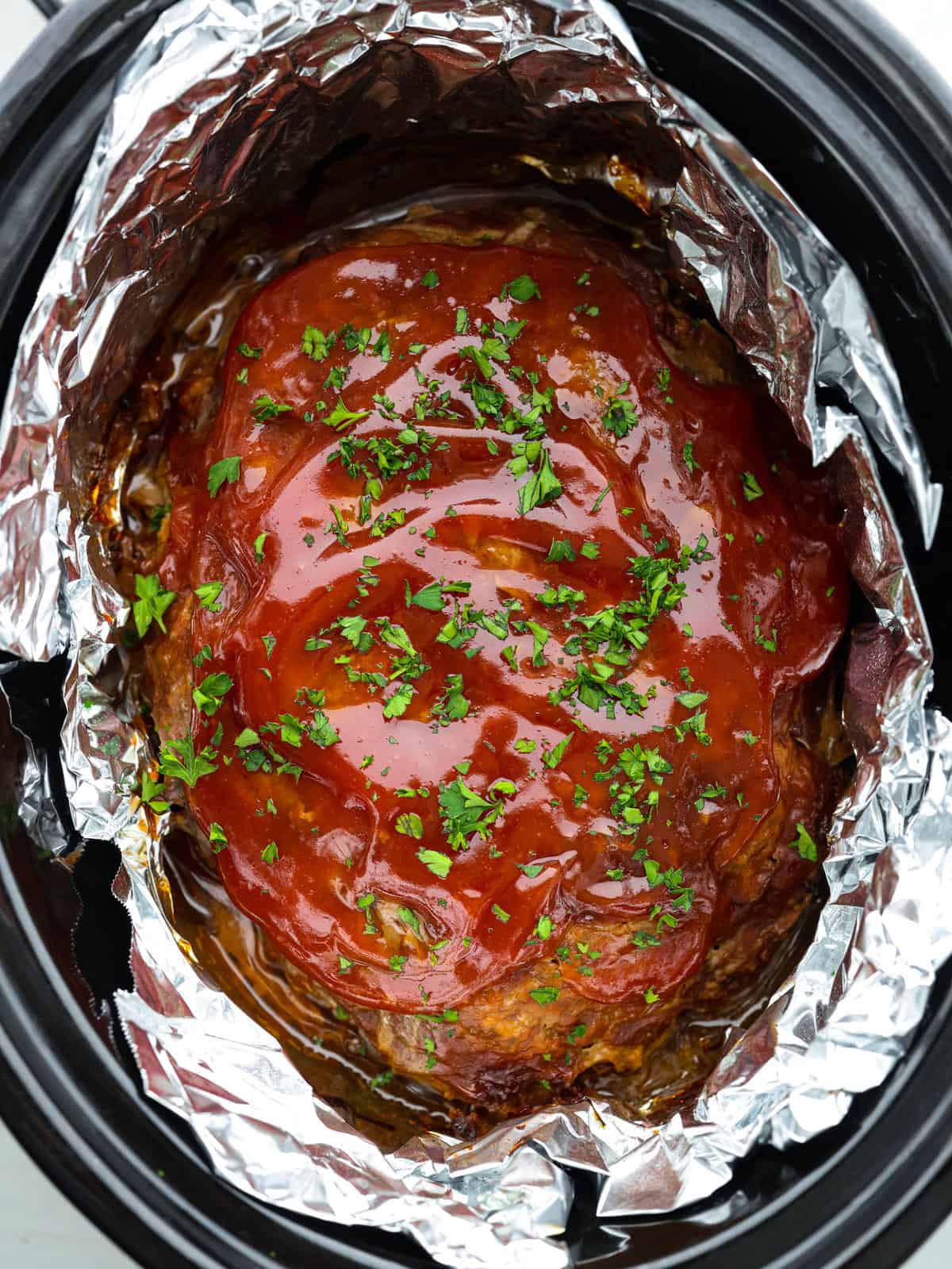
    Meatloaf is a classic comfort food that is loved by the whole family! This recipe for crockpot meatloaf is easy to prepare, and using your slow cooker allows the flavors to blend together for a delicious meal.

    If you love meatloaf then you have to try out some more of my easy and delicious meals that are perfect for a busy weeknight dinner. Some of my favorites are this Meatloaf Sandwich, this delicious Glazed Meatloaf, and these yummy Meatloaf Meatballs!

    Crockpot Meatloaf Recipe

    Meatloaf is a classic comfort food that is easy to make and so versatile! It’s a great option for a budget-friendly, easy-to-clean meal that your family will go crazy over! I love that I can throw it in the crockpot, let it cook all day and dinner is ready to go. It’s a lifesaver for busy days! This is definitely my new go-to meatloaf recipe.

    Since this crockpot meatloaf is the kind of thing you can set and forget, you can use the extra time to make some easy sides to go with it! Mashed potatoes are an absolute must. Add in some delicious homemade rolls and a leafy green salad and you have a meal that will become a go-to for any busy night!

    Ingredients in Crockpot Meatloaf

    This recipe for crockpot meatloaf is perfect for a cozy weeknight dinner! The combo of the savory beef, sweet glaze, and tangy balsamic vinegar creates a delicious blend of flavors that is sure to please your taste buds! Check out the recipe card at the bottom of the post for measurements.

    Ground Beef: I always get beef that is no leaner than 85 percent. The higher fat content helps the meatloaf stay moist! If you want a healthier version of crockpot meatloaf, you can also swap out the beef for ground turkey. Keep in mind, though, turkey tends to dry out more easily so you’ll want to add more liquids in order for it to turn out nice and moist.Onion: The onions add a sweet and savory flavor to the meatloaf and also help to bind the ingredients together. Parsley: Parsley adds a fresh and herby flavor to the meatloaf and also adds a pop of color!Italian Bread Crumbs: Using Italian-style breadcrumbs adds a subtle flavor to the meatloaf. You can even make your own breadcrumbs using this recipe. Milk: The milk helps to make the meatloaf moist and tender.Worcestershire Sauce: This sauce adds a savory and slightly tangy flavor to the meatloaf.Eggs: The eggs help to bind the ingredients together.Garlic Powder: The garlic adds such a delicious savory flavor to the dish! Kosher Salt: Salt is used to enhance the flavors in the recipe. Pepper: Pepper is used to add subtle spiciness (but don’t worry, no heat!)Ketchup: Ketchup is used as a glaze for the meatloaf. Balsamic Vinegar: This adds a tangy and slightly sweet flavor to the glaze. Brown Sugar: This adds a sweetness to the glaze.

    How to Make Meatloaf in the Slow Cooker

    The best part about this meal is that the crockpot does most of the work, leaving you with plenty of time to relax and enjoy your meal with the rest of your family!

    Line: Line the inside of a crockpot with foil. Spray the foil with non-stick cooking spray.Combine and Mix: In a large bowl combine beef, onion, parsley, Italian breadcrumbs, milk, Worcestershire sauce, eggs, garlic powder, salt, and pepper. Use your hands to mix until combined being careful not to overmix. Shape the Meatloaf: Using your hands, shape the meatloaf into a large oval and place it on top of the foil in the crockpot.Whisk the Glaze: In a small bowl whisk together ketchup, vinegar, and brown sugar. Brush half of the mixture on the top of the meatloaf. Save the other half for later.Cook: Cook on low for 6 hours, or on high for 3 hours. Bake until the beef is cooked throughout and reaches 160 degrees Fahrenheit. Top with Glaze: When finished cooking, top it with the remaining glaze.Slice and Serve: Serve sliced, with remaining glaze sauce served on the side for drizzling.

    What is the Secret to Moist Meatloaf?

    There are a few things you can do to ensure that your meatloaf doesn’t turn out dry:

    Use Meat with a Higher Fat Content: Using ground beef with a higher fat content helps keep the meatloaf moist and flavorful while it cooks. Don’t Overmix: Overmixing the ingredients can cause the proteins in the beef to break down, resulting in a dry and tough meatloaf. Add Moisture to the Recipe: Adding ingredients like milk, eggs, or even some grated vegetables can help to add moisture to the meatloaf.Don’t Skip the Glaze: Brushing a glaze or sauce on top of the meatloaf while it cooks can help to add moisture and flavor to the meatloaf.Check the Temperature: Meatloaf should be cooked to an internal temperature of 160 degrees Fahrenheit. Cooking it for too long or at too high a temperature can cause the meat to dry out.Let it Rest: Letting the meatloaf rest for a few minutes before slicing lets all the liquids soak into the meatloaf to make sure it doesn’t dry out.

    Storing Leftovers

    Crockpot meatloaf will last for up to 3-4 days in the fridge and up to 2-3 months in the freezer. Here’s how you can store it! Psst- it makes fantastic leftovers! Heat it up for a delicious, easy meal.

    In the Refrigerator: Let your meatloaf cool down to room temperature before storing it. This helps to prevent any bacteria from growing. Wrap the meatloaf in plastic wrap and place in an airtight container or a zip-top bag. It should stay nice and fresh for 3-4 days.In the Freezer: If you want to keep your meatloaf for longer, wrap it tightly in plastic wrap and then in foil. Label it with the date and store it in the freezer for up to 2-3 months. Thaw in the fridge before reheating.Reheating: You can easily reheat your crockpot meatloaf in the microwave for a minute or two, or in the oven for about 15 minutes at 350 degrees Fahrenheit.

    Side to Go with MeatloafIf you want to make this meal even more delicious then you have to pair it with some yummy sides! All of these side dishes would be amazing with this crockpot meatloaf. The whole family will be hooked!
    Side DishesGarlic Butter String BeansSide DishesSuper Easy Crockpot Mashed PotatoesSaladsCopycat Olive Garden SaladSide DishesRoasted Brown Butter Honey Garlic Carrots

    Print

    Crockpot Meatloaf

    Meatloaf is a classic comfort food that is loved by the whole family! This recipe for crockpot meatloaf is easy to prepare, and using your slow cooker allows the flavors to blend together for a delicious meal.

    Course DinnerCuisine AmericanKeyword crockpot meatloaf, meatloaf in the crockpot, meatloaf in the slow cooker

    Prep Time 10 minutesCook Time 3 hoursTotal Time 3 hours 10 minutes

    Servings 8
    Calories 396kcal
    Author Alyssa Rivers

    IngredientsMeatloaf2 pounds ground beef no leaner than 85%1/2 onion, chopped3 tablespoons fresh parsley, chopped3/4 cup Italian bread crumbs1/2 cup milk1 tablespoon Worcestershire sauce2 eggs1 teaspoon garlic powder1 teaspoon Kosher salt1/2 teaspoon pepperGlaze1/2 cup ketchup2 tablespoons balsamic vinegar3 tablespoons brown sugar
    InstructionsLine the inside of a crockpot with foil. Spray the foil with non-stick cooking spray.In a large bowl combine beef, onion, parsley, Italian breadcrumbs, milk, Worcestershire sauce, eggs, garlic powder, salt, and pepper. Use your hands to mix until combined being careful not to overmix. Using your hands, shape the meatloaf into a large oval and place it on top of the foil in the crockpot.In a small bowl whisk together ketchup, vinegar, and brown sugar. Brush half of the mixture on the top of the meatloaf. Save the other half for later.Cook on low for 6 hours, or on high for 3 hours. Bake until the beef is cooked throughout and reaches 160 degrees Fahrenheit. When finished cooking, top it with the remaining glaze.Serve sliced, with remaining glaze sauce served on the side for drizzling.

    NutritionServing: 1slice | Calories: 396kcal | Carbohydrates: 19g | Protein: 23g | Fat: 25g | Saturated Fat: 9g | Polyunsaturated Fat: 1g | Monounsaturated Fat: 11g | Trans Fat: 1g | Cholesterol: 123mg | Sodium: 705mg | Potassium: 455mg | Fiber: 1g | Sugar: 10g | Vitamin A: 311IU | Vitamin C: 3mg | Calcium: 78mg | Iron: 3mg

    Powered by WPeMatico

  • Mushroom Risotto

    Mushroom Risotto

    Mushroom Risotto is soft short-grained rice that is cooked in broth with flavorful button mushrooms and sweet peas. The flavor combination is incredible and it’s the perfect side dish for any protein!

    This classic Italian recipe can be served as main dish or a side paired with a hearty meat. This is a comfort meal that is planned and prepared with you in mind! Slow Cooker Italian Chicken and Potatoes, some delicious Creamy Tomato Italian Parmesan Chicken or this filling and flavorful Classic Italian Wedding Soup are some of our favorite classic Italian meals to try.

    Mushroom Risotto

    I needed something light, comforting and manageable for the week and I knew Mushroom Risotto had to be made! It is a dish that can be warmed up quickly and taste good every day. It has simple ingredients and when combined all together adds this comforting and oh-so-good meal that makes your day go even better! This Mushroom Risotto is perfect for making ahead for your busy week or enjoying it right off the stove top.

    I am all about making life simple. With life so busy all the time with the kids activities and endless errands to run, quick and easy meals, like this mushroom risotto and my favorite lemon garlic chicken to go with it are my savior! This is a quick and easy meal that my kids can warm up quick after school or pack along as a lunch. Check out my healthy meals round up and slow cooker dinner recipes for more great quick and easy meal ideas.

    Ingredients

    Even though this list looks long, the ingredients for mushroom risotto are really simple! Most of them are herbs or things that you already have on hand. This dish is so flavorful and easy to make, I know you are going to love it as much as my family does! The measurements are listed below in the recipe card.

    Chicken or Vegetable Broth: Either will work, they add flavor and it is what you cook the rice in.Extra-Virgin Olive Oil: Has a nice soft flavor and cooks well.Onion: Finely chopped.Butter: To cook veggies.Garlic Cloves: Minced.Button Mushrooms: It’s a European and North American mushroom with tons of nutrients and packed with flavor.Fresh Thyme: Earthy flavor perfect for this dish.Salt and Pepper: Just a pinch.Arborio Rice: The best rice to use! I have other tips for choosing rice below in the tip box.White Wine: Use your favorite, I talk more about the wine below in the tip box.Fresh Parmesan Cheese: Makes this so creamy and flavorful!Frozen Peas: You could use fresh instead.Fresh Parsley: For garnish and extra flavor.

    Mushroom Risotto Recipe

    This mushroom risotto is a very simple recipe and you are going to love how it turns out! The hardest part is cooking the rice the perfect amount of time so that it isn’t hard, but it doesn’t get mushy. You will be able to tell when it starts to get close, this is a recipe you don’t want to walk away from. It only takes 35 minutes, and you will be so in love with the flavor!

    Warm Broth: Start by warming the chicken broth.  Either in a large bowl in the microwave or in a medium saucepan over medium heat bring to a simmer.Cook Onion and Mushroom: In a large pot heat the olive oil.  Add the onion and cook until tender.  Add 1 tbsp butter, garlic, mushrooms and thyme.  Cook until the mushrooms have softened and are tender.  Then season with salt and pepper.  Remove and set aside on a plate.Add Rice: Melt the remaining 1 tbsp butter and add the arborio rice.  Stirring on medium heat, cook the grains until the are lightly brown and start to toast about 2 minutes. Then add the wine and cook until the wine has absorbed.  Add Broth: Add one cup of broth at a time to the rice and stir frequently until the rice absorbs the liquid.  Continue to add one cup of broth and allow the rice to absorb after each addition.  Stir often and cook until the risotto is al dente and not mushy.  You may not need all of the broth.  Add Veggies: Add the mushrooms, parmesan, and peas back to the rice and stir.  Garnish with fresh parsley.  Serve while warm. 

    Tips for Making Mushroom Risotto

    I love how mushroom risotto can taste different in so many ways! The brands you use, the rice you choose, and the wine you decide on are all going to change the flavor of the dish. The best part about cooking is you get to decide how you like it best. Here are some tips for choosing ingredients.

    Best Rice to Use: The best northern Italian dish, risotto is elegant and simple, but there are a few tricks to getting it right. First, always use Italian short- grain rice like arborio or vialone; nothing else will do as a substitute for best results.Best Wine: Mushroom risotto will make most wines taste delicious, but some will be amazing. In general, it’s especially good with earthier reds, like Pinot Noir or Nebbiolo, or fuller-bodied whites, like lightly oaked Chardonnay or Pinot Gris. It is always best to choose a wine that you enjoy and use that type of wine in the recipe.Leave the Wine Out: Yes! You Can Make Risotto Without Wine. The good news is you can definitely make risotto without wine. White grape juice: Use white grape juice as a substitute when adding sweetness or deglaze the pan. For a punchier substitute, try mixing a tablespoon of vinegar or lemon juice per cup of grape juice. Chicken or vegetable stock: Substitute stock for white wine when you want to add depth of flavor to a dish.Using Red Wine: Some recipes get pretty specific about the kind of wine they want you to use: an oaky chardonnay in this reduction sauce, a hearty Italian red for that braise. All wines will chemically behave in the same way, so there’s no danger that a recipe won’t work if you use a red instead of a white or vice versa.

    Storing Leftovers

    Mushroom risotto makes great leftovers, and is also a great recipe to make ahead of time. It reheats really well and is just as delicious reheated.

    In the Refrigerator: You can store your leftovers in the refrigerator in an airtight container or in a shallow baking pan covered with foil for up to 4 days. To Reheat: Preheat the oven to 300 degrees. Place risotto in a shallow baking pan covered with foil and let it get warm, but make sure not to let it cook again.

    More Yummy Rice DishesI love rice! It is a great way to switch up your dinner menu without adding a lot of extra work. These rice dishes are simple, delicious, and easy to make into a well rounded nutritious meal that doesn’t take all night to prepare. You have to try all of them!
    DinnerEasy Sausage and Rice CasseroleDinnerBetter Than Takeout Fried Rice RecipesDinnerOne Pot Creamy Parmesan Chicken with Mushroom RiceSide DishesCheesy Zucchini Rice

    Print

    Mushroom Risotto

    Mushroom Risotto is soft short-grained rice that is cooked in broth with flavorful button mushrooms and sweet peas. The flavor combination is incredible and it’s the perfect side dish for any protein!

    Course Side DishCuisine ItalianKeyword mushroom risotto, rice dishes

    Prep Time 5 minutesCook Time 30 minutesTotal Time 35 minutes

    Servings 4 people
    Calories 786kcal
    Author Alyssa Rivers

    Ingredients6-8 c. chicken or vegetable broth1 tbsp. extra-virgin olive oil1 onion finely chopped2 tbsp. butter divided2 cloves garlic minced16 oz. button mushrooms sliced1 tbsp fresh thyme stems removed and mincedsalt and pepper2 cups arborio rice1/2 c. white wine1 c. Fresh Parmesan Cheese grated3/4 c. frozen peas thawed2 tbsp. chopped fresh parsley
    InstructionsStart by warming the chicken broth.  Either in a large bowl in the microwave or in a medium saucepan over medium heat bring to a simmer.In a large pot heat the olive oil.  Add the onion and cook until tender.  Add 1 tbsp butter, garlic, mushrooms and thyme.  Cook until the mushrooms have softened and are tender.  Season with salt and pepper.  Remove and set aside on a plate.Melt the remaining 1 tbsp butter and add the arborio rice.  Stirring on medium heat, cook the grains until the are lightly brown and start to toast about 2 minutes.  Add the wine and cook until the wine has absorbed.  Add one cup of broth at a time to the rice and stir frequently until the rice absorbs the liquid.  Continue to add one cup of broth and allow the rice to absorb after each addition.  Stir often and cook until the risotto is al dente and not mushy.  You may not need all of the broth.  Add the mushrooms, parmesan, and peas back to the rice and stir.  Garnish with fresh parsley.  Serve while warm. 

    NotesUpdated Feb 2023
    Originally Posted May 2019
    NutritionCalories: 786kcal | Carbohydrates: 98g | Protein: 34g | Fat: 26g | Saturated Fat: 14g | Polyunsaturated Fat: 1g | Monounsaturated Fat: 9g | Trans Fat: 0.2g | Cholesterol: 56mg | Sodium: 2430mg | Potassium: 682mg | Fiber: 7g | Sugar: 9g | Vitamin A: 2448IU | Vitamin C: 33mg | Calcium: 743mg | Iron: 7mg

    Powered by WPeMatico

  • King Cake

    King Cake

    King cake is a colorful and festive dessert for Mardi Gras celebrations! With its gorgeous swirl of purple, green and gold icing, this sweet and soft cake is a treat for both the eyes and the taste buds. Whether you’re a seasoned king cake aficionado or a newcomer to this sugary delight, there’s no denying its irresistible charm!

    With Mardi Gras just around the corner, here are a few more must-try recipes inspired by New Orleans cuisine: homemade beignets, gumbo, and jambalaya! You’ve got to try them all!

    What is King Cake?

    If you’ve never heard of it before, King Cake has a rich history dating back to the ancient celebrations of the Epiphany in Europe. Originating in France, it’s now a staple dessert for Mardi Gras celebrations in New Orleans! Although it’s called cake, this dessert is more similar to a braided sweet bread like babka!

    King cake is soft, sweet, and sure to be your new favorite Mardi Gras recipe. The bread has a brown sugar cinnamon filling with added pecans. It’s absolutely to die for! Top it off with a simple glaze, colored sugar, and you have a dessert that’s both festive and delicious on your hands!

    Why is There a Plastic Baby in King Cake?

    You may be asking yourself, why is there a baby in the cake? Here’s why! The tradition of placing a small plastic baby in the cake originated in Europe and was then brought to New Orleans by French settlers. The baby symbolizes good luck and prosperity for the person who finds it in their slice. It is said that whoever finds the baby has to host the next Mardi Gras celebration. This tradition is so fun and makes king cake even more exciting to eat! It’s a great way to spread good luck and joy among friends and family during your Mardi Gras festivities!

    Everything You’ll Need

    The great thing about this king cake recipe is that it uses super simple ingredients. In fact, as long as you have some sanding sugar on hand, you likely have everything else to whip up this festive dessert! Looking for measurements? They can all be found in the recipe card below.

    Dough

    Warm Milk: Warm milk helps activate the yeast, allowing the king cake dough to rise and become fluffy!Instant Dry Yeast: This ingredient is essential for making the dough rise.Granulated Sugar: Adds sweetness to the dough and also helps feed the yeast.Unsalted Butter: You can’t go wrong with butter! It adds rich flavor and moisture to the bread.Eggs: Bind everything together.Salt: Acts as a flavor enhancer!Flour: Make sure you use flour with a low protein content. This will make sure your bread turns out nice and soft! I used all-purpose flour and it turned out perfectly.

    Filling

    Brown Sugar: Adds a deeper sweetness.Ground Cinnamon: The perfect match for brown sugar! It adds the perfect warm spice.Melted Butter: Makes the king cake filling smooth and rich.Chopped Pecans: I love adding chopped pecans because of their tasty flavor and texture! Chopped walnuts or sliced almonds will also work.

    Glaze

    Powdered Sugar: Adds sweetness and gives the glaze a smooth texture.Water: For adjusting the consistency.Vanilla: Adds an extra pop of flavor. I recommend using pure vanilla extract here!Colored Sugar: For the green, purple, and yellow topping.

    How to Make King Cake

    Now, I know this is a pretty lengthy list of instructions, but king cake is a lot easier to make than you’d think! I’ve broken the steps up into 3 simple sections.

    Making the Dough

    Activate Yeast: In the bowl of a stand mixer, combine your warm milk, yeast, and 3 tablespoons of your sugar. Allow the mixture to sit for about 5 minutes until the yeast becomes active and foamy.Mix in Wet Ingredients: Add in the rest of the sugar, butter, and eggs. Mix using the whisk attachment on medium high speed until everything comes together.Mix in Dry Ingredients: Add 4 cups of flour and your salt into the bowl and switch out the whisk for the dough hook, mix at low speed until the flour is fully incorporated, at this point you can determine if you need to add more flour, the dough should pull clean from the mixer when it is the right consistency, but not be too stiff, it should be slightly sticky.Continue to Mix: Increase the speed to a medium-high speed and mix for an additional 3-4 minutes. This last step will knead the dough and build the strength of the gluten.Proof: Remove the dough from your mixer and place it into an oiled bowl, cover with plastic wrap and keep covered for about an hour, until the dough doubles in size.

    Preparing the Filling, Baking

    Combine Ingredients: While your king cake dough is proofing, make your filling. In a medium bowl, mix your sugar, cinnamon, and butter. Set aside.Roll Out Dough: Once your dough is doubled in size, tip it out onto a floured surface, roll into a large rectangle, mine was about 24 inches by 15 inches. Cut the slab into 3 equal strips, mine were 24 inches by 5 inches.Add Filling: Spread your filling evenly on each strip and sprinkle your chopped pecans on top. Roll each strip lengthwise so you have 3 long filled rolls.Braid Together: Lay the strips side by side and secure them together at the top. Braid the whole length of the 3 strips together and secure the other end by pinching the dough together. Form the braid into a circle and secure the two ends together as best as you can.Proof: Place the prepared rolled and braided dough onto a baking sheet lined with parchment. Cover and allow the cake to proof until it is nearly double in size, depending on the temperature of the room you are making this cake in it could take 45 minutes to a little over an hour.Preheat Oven: While your cake proofs, preheat your oven to 375 degrees Fahrenheit.Bake: Once the cake is ready, bake for 25-30 minutes, a toothpick inserted should come out clean, and the loaf should be a golden brown color all over. Remove from the oven and allow the king cake to cool completely before glazing.

    Adding the Glaze

    Add Plastic Baby: Before glazing your cake, take a mini plastic baby and poke it into one of the folds of your cake, hiding it completely for someone to find later.Prepare Glaze Mixture: In a medium bowl, mix together your powdered sugar, water, and vanilla. Pour the glaze over your cake evenly and while the glaze is still tacky, sprinkle the colored sugar over it in colored stripes.Find the Baby: Make sure to have everyone inspect their cuts of cake to find the baby before eating!

    Tips and Tricks

    King cake is pretty straightforward to make, but here are a few extra tips! You’ll want to make this bread for Mardi Gras every year, it’s too good!

    Use Warm Milk: The warm milk helps activate the yeast, allowing the king cake dough to rise and become fluffy.Roll Out Dough Evenly: When rolling out the dough, try to make it as even as possible so that the cake bakes evenly.Add Filling Carefully: When adding the cinnamon sugar filling, try to spread it evenly without tearing the dough.Let the Cake Cool Before Icing: Allow your king cake to cool completely before putting the icing over the top, or the icing will melt and run off the cake.

    Storing Leftovers

    King Cake can last up to a week when stored properly! Here’s how to keep your King Cake fresh and delicious:

    At Room Temperature: Store your King Cake in a cool, dry place at room temperature in an airtight container. Avoid storing it in a hot, humid area as this can cause the cake to become dry and spoil quickly.In the Refrigerator: If you don’t plan to eat the cake within a few days, you can store it in the refrigerator. Just make sure to wrap it tightly in plastic wrap or place it in an airtight container.Reheating: For that freshly-baked effect, simply wrap your king cake in foil and place in a 300 degree Fahrenheit oven for 10-15 minutes, or until heated through.

    More New Orleans RecipesCajun recipes are some of my favorites! Here are a few more tasty meals to serve with your king cake for Mardi Gras! The whole family will love them. They have the absolute best flavor!
    DinnerShrimp BoilDinnerCajun Shrimp and Sausage Veggie SkewersDinnerGrilled Cajun Garlic Butter Lobster TailsDinnerCajun Garlic Shrimp and Grits

    Print

    King Cake

    King cake is a colorful and festive dessert for Mardi Gras celebrations! With its gorgeous swirl of purple, green and gold icing, this sweet and soft cake is a treat for both the eyes and the taste buds. Whether you’re a seasoned king cake aficionado or a newcomer to this sugary delight, there’s no denying its irresistible charm!

    Course DessertCuisine American, New OrleansKeyword king cake recipe

    Prep Time 30 minutesCook Time 30 minutesProofing time 1 hour 30 minutesTotal Time 2 hours 30 minutes

    Servings 12 People
    Calories 517kcal
    Author Alyssa Rivers

    IngredientsDough1 cup milk warm1 packet instant dry yeast 2 ½ teaspoons½ cup granulated sugar divided⅓ cup unsalted butter melted2 eggs room temperature1 ½ teaspoons salt4-5 cups all purpose flourFilling1 cup brown sugar packed1 tablespoon ground cinnamon½ cup melted butter¾ cup chopped pecansGlaze2 cups powdered sugar4 tablespoons water1 teaspoon vanillaColored sugar for the top green purple and yellow
    InstructionsDoughIn the bowl of a stand mixer, combine your warm milk, yeast, and 3 tablespoons of your sugar. Allow the mixture to sit for about 5 minutes until the yeast becomes active and foamy.Add in the rest of the sugar, butter, and eggs. Mix using the whisk attachment on medium high speed until everything comes together.Add 4 cups of flour and your salt into the bowl and switch out the whisk for the dough hook, mix at low speed until the flour is fully incorporated, at this point you can determine if you need to add more flour, the dough should pull clean from the mixer when it is the right consistency, but not be too stiff, it should be slightly sticky.Increase the speed to a medium high speed and mix for an additional 3-4 minutes. This last step will knead the dough and build the strength of the gluten.Remove the dough from your mixer and place it into an oiled bowl, cover with plastic wrap and keep covered for about an hour, until the dough doubles in size.FillingWhile your dough is proofing, make your filling. In a medium bowl, mix your sugar, cinnamon, and butter. Set aside.Once your dough is doubled in size, tip it out onto a floured surface, roll into a large rectangle, mine was about 24 inches by 15 inches. Cut the slab into 3 equal strips, mine were 24 inches by 5 inches.Spread your filling evenly on each strip and sprinkle your chopped pecans on top. Roll each strip lengthwise so you have 3 long filled rolls. Once your filled strips are ready you will braid them togetherLay the strips side by side and secure them together at the top. Braid the whole length of the 3 strips together and secure the other end by pinching the dough together. Form the braid into a circle and secure the two ends together as best as you can.Place the prepared rolled and braided dough onto a baking sheet lined with parchment. Cover and allow the cake to proof until it is nearly double in size, depending on the temperature of the room you are making this cake in it could take 45 minutes to a little over an hour.While your cake proofs, preheat your oven to 375 degrees fahrenheit.Once the cake is ready, bake for 25-30 minutes, a toothpick inserted should come out clean, and the loaf should be a golden brown color all over. Remove from the oven and allow the cake to cool completely before glazing.GlazeBefore glazing your cake, take a mini plastic baby and poke it into one of the folds of your cake, hiding it completely for someone to find later.In a medium bowl, mix together your powdered sugar, water, and vanilla. Pour the glaze over your cake evenly and while the glaze is still tacky, sprinkle the colored sugar over it in colored stripes.Make sure to have everyone inspect their cuts of cake to find the baby before eating!

    NutritionCalories: 517kcal | Carbohydrates: 81g | Protein: 7g | Fat: 19g | Saturated Fat: 9g | Polyunsaturated Fat: 2g | Monounsaturated Fat: 7g | Trans Fat: 1g | Cholesterol: 64mg | Sodium: 377mg | Potassium: 145mg | Fiber: 2g | Sugar: 47g | Vitamin A: 472IU | Vitamin C: 0.1mg | Calcium: 66mg | Iron: 2mg

    Powered by WPeMatico

  • Steak Diane

    Steak Diane

    Juicy and succulent Steak Diane is the perfect dinner for any occasion. Diane refers to the delicious cream sauce made that includes mustard, Worcestershire sauce, and Cognac. The steak is flattened and seared in butter, and couldn’t be more flavorful!

    At my house, a steak dinner is a real treat that we can all look forward to. It’s everyone’s favorite and always what they ask for on their birthdays and other special occasions. If your family is the same way, you have to try this super easy Juicy Air Fryer Steak, this delicious Skillet Salisbury Steak, and this divine New York Steak.

    What is Steak Diane?

    Steak diane is a beef dish that is served with a mushroom cognac sauce that is typically flambeed. The sauce has heavy cream, mustard, and broth to give it lots of depth of flavor. There are no flames needed to get a great flavor in this sauce! It really hits the spot, and the whole family loves it too! The best part is, it’s almost a complete meal all on it’s own. I like to add some grilled asparagus or air fryer broccoli for an extra veggie. This dish is of course AMAZING served with some mashed potatoes too!

    Sometimes I just really crave a good steak! Sometimes its as simple as some slow cooker beef tips, and other times I want a full on prime rib. The latter is usually just for special occasions! Sometimes, I want a dinner that feels and tastes just as expensive as a prime rib dinner, but for half the cost. This steak diane recipe is the perfect solution! It’s a delicious, tender, and flavorful piece of meat smothered in a yummy creamy mushroom sauce. You tenderize the steak, then make a delicious mushroom and cream sauce in the same pan that you cook the meat. It blends all the flavors together for a delicious balanced flavor.

    Ingredients

    The traditional steak diane recipe doesn’t include mushrooms. I really like including them because they add a lot of rich and hearty flavor to the sauce. You could also include garlic, it does the same thing for the sauce. This dish would also be delicious garnished with fresh parsley and chives. Make this recipe your own! You can find the exact measurements below in the recipe card.

    Olive Oil: I prefer to cook my steaks in olive oil, but you can use your favorite cooking oil here.Butter: This adds a lot of flavor to the steak and helps them get a nice color.Beef Tenderloin Steaks: The quality of the meat will make a difference. I would get a nice piece of meat but it doesn’t have to be the most expensive since you will be tenderizing it.Shallot: This adds tons of flavor to the sauce.Button Mushrooms: I prefer button mushrooms for this sauce, but you could use pretty much any kind of mushroom.Cognac or Brandy: It is traditional to add cognac to the sauce. You could substitute brandy or broth if you don’t want to add any alcohol.Beef Broth: Beef broth adds extra flavor and liquid to the sauce which makes it the perfect consistency.Heavy Cream: This is what makes the sauce so thick and creamy. It really makes a huge difference! Worcestershire Sauce: It’s sweet, sour, and spicy, and perfect in the sauce!Dijon Mustard: It’s tangy and sharp and keeps the sauce really flavorful.Dried Italian Seasonings: I like to make my own blend for the freshest flavors, you can find the recipe here.Kosher Salt and Cracked Black Pepper: To taste!

    Steak Diane Recipe

    Don’t be fooled by the number of steps in this steak diane recipe, it is all really easy! First, you will pound the meat until it is about 1 inch thick. This will keep it really tender and help it all cook evenly. You sear the steaks in the pan, and then make the sauce in the same pan. This gets all of those delicious flavors into the sauce. Add your steaks back in to finish warming and you have the most amazing dinner!

    Cook Steak

    Pound: Pound the steaks down to 1-inch thickness with a kitchen mallet then season both sides of each steak with salt and pepper.Cook Steak: Heat the butter and oil in a large skillet over medium-high heat. Add the steaks to the skillet and cook for about 4-5 minutes on each side. Then cook to the desired doneness. Medium-rare steak is cooked to 135 degrees Fahrenheit, but you can cook it longer if you like it more well done. Transfer the cooked steaks to a plate and then tent with foil. Now you will make the sauce for steak diane.

    Make Sauce

    Cook Mushrooms: In the same skillet cook the sliced mushrooms for 3-5 minutes, or until softened. Then remove from the skillet and set aside.Saute Shallot: Again, in the same skillet sauté the shallot over medium heat for 1-2 minutes, until softened. Add additional olive oil if needed.Add Cognac: Add the cognac and cook for 1 minute until the alcohol is almost evaporated. Then use a spatula to scrape any browned bits from the bottom of the skillet. You can substitute the alcohol with beef broth if you prefer to leave it out.Add Broth: Stir in the beef broth and bring to a boil over high heat. Cook until thickened, about 2 minutes.Add Ingredients: Stir in the cream, dijon mustard, and Worcestershire sauce. Cook for 2-3 minutes.Add Mushrooms: Add the cooked mushrooms back into the sauce.Season: Season with dried Italian seasonings, salt, and pepper.Add Steaks: Return the steaks to the sauce in the skillet. Spoon the sauce over the steaks and heat through until warm.Season: Season with additional salt and pepper if needed. Garnish with fresh herbs and enjoy!

    Tips for Making Steak Diane

    This simple steak diane recipe is so fun to make! There are so many different ways to make it, you don’t have to stick to just what I do. You can change the recipe to fit your taste buds! Here are some tips for making steak diane.

    Grilling the Steaks: You could grill the steaks if you didn’t want to cook it all in the pan. You can just make the sauce separately and add it on top after the steak is done cooking.Without Mushrooms: I know some of us have picky eaters. You don’t have to add the mushrooms if you don’t think they will work for you. The sauce is still incredibly flavorful without it.Leave out the Cognac: If you don’t want to use alcohol while cooking, you could just add extra broth instead. The traditional recipe calls for veal demiglace, which you would be able to find at a specialty store or local butcher. That will add all the flavor you are looking for.

    Storing Leftovers

    This steak diane sauce just gets more flavorful over time. When you reheat it you will want to do it slowly so that you don’t break the sauce or overcook the meat. Here is how to store leftovers.

    In the Refrigerator: You can store your steak diane in the refrigerator in an airtight container for up to 4 days.

    Other Easy Dinner RecipesDinner doesn’t have to take hours! In fact, it doesn’t even have to take a whole hour. I have kids and a really busy schedule, so I’ve spent a lot of time figuring out easy delicious recipes that the whole family will love. Here are a few of my favorites that I think you are going to love!
    DinnerGarlic Chicken Stir FryDinnerInstant Pot Lemon Garlic ChickenDinnerOne Pot Beef StroganoffBeefKorean Ground Beef Stir Fry

    Print

    Steak Diane
    #wprm-recipe-rating-6 .wprm-rating-star.wprm-rating-star-full svg * { fill: #343434; }#wprm-recipe-rating-6 .wprm-rating-star.wprm-rating-star-33 svg * { fill: url(#wprm-recipe-rating-6-33); }#wprm-recipe-rating-6 .wprm-rating-star.wprm-rating-star-50 svg * { fill: url(#wprm-recipe-rating-6-50); }#wprm-recipe-rating-6 .wprm-rating-star.wprm-rating-star-66 svg * { fill: url(#wprm-recipe-rating-6-66); }linearGradient#wprm-recipe-rating-6-33 stop { stop-color: #343434; }linearGradient#wprm-recipe-rating-6-50 stop { stop-color: #343434; }linearGradient#wprm-recipe-rating-6-66 stop { stop-color: #343434; }

    Juicy and succulent Steak Diane is the perfect dinner for any occasion. Diane refers to the delicious cream sauce made that includes mustard, Worcestershire sauce, and Cognac. The steak is flattened and seared in butter, and couldn’t be more flavorful!

    Course DinnerCuisine AmericanKeyword steak diane, steak dinner, steak recipes

    Prep Time 10 minutesCook Time 15 minutesTotal Time 25 minutes

    Servings 4 people
    Calories 332kcal
    Author Alyssa Rivers

    Ingredients2 tablespoons olive oil1 tablespoon butter(4) 4 ounce beef tenderloin steaks, pounded to 1-inch thick1 shallot, minced2 cups button mushrooms, sliced1/2 cup cognac or brandy1 cup beef broth3/4 cup heavy cream1 teaspoon Worcestershire sauce 1 teaspoon Dijon mustard1 teaspoon dried Italian seasoningsKosher salt and cracked black pepper, to taste
    InstructionsPound the steaks down to 1-inch thickness with a kitchen mallet then season both sides of each steak with salt and pepper.Heat the butter and oil in a large skillet over medium-high heat. Add the steaks to the skillet and cook for about 4-5 minutes on each side. Cook to the desired doneness. Medium-rare steak is cooked to 135 degrees Fahrenheit, but you can cook it longer if you like it more well done. Transfer the cooked steaks to a plate and tent with foil.In the same skillet cook the sliced mushrooms for 3-5 minutes, or until softened. Remove from the skillet and set aside.Again, in the same skillet sauté the shallot over medium heat for 1-2 minutes, until softened. Add additional olive oil if needed.Add the cognac and cook for 1 minute until the alcohol is almost evaporated. Use a spatula to scrape any browned bits from the bottom of the skillet. You can substitute the alcohol with beef broth if you prefer to leave it out.Stir in the beef broth and bring to a boil over high heat. Cook until thickened, about 2 minutes.Stir in the cream, dijon mustard, and Worcestershire sauce. Cook for 2-3 minutes.Add the cooked mushrooms back into the sauce.Season with dried Italian seasonings, salt, and pepper.Return the steaks to the sauce in the skillet. Spoon the sauce over the steaks and heat through until warm.Season with additional salt and pepper if needed. Garnish with fresh herbs and enjoy!

    NutritionCalories: 332kcal | Carbohydrates: 5g | Protein: 4g | Fat: 26g | Saturated Fat: 13g | Polyunsaturated Fat: 2g | Monounsaturated Fat: 10g | Trans Fat: 0.1g | Cholesterol: 59mg | Sodium: 295mg | Potassium: 274mg | Fiber: 1g | Sugar: 3g | Vitamin A: 754IU | Vitamin C: 2mg | Calcium: 48mg | Iron: 1mg

    Powered by WPeMatico