Author: adler

  • Should We Go to Therapy with Our Friends?

    Should We Go to Therapy with Our Friends?

    Should We Go to Therapy with Our Friends?Written by: Christie Tate | Published on: February 2, 2023

    Christie Tate, the New York Times–bestselling author of Group and the new book B.F.F.: A Memoir of Friendship Lost and Found, reflects on how a therapy session with a former friend helped repair their rupture.
    “It means so much to me that you were willing to do this session,” Deb said after the therapist welcomed us to the session, and we both teared up. Deb had approached me with the therapy idea after we managed pleasant chitchat about our kids and school politics at a mutual friend’s party. It was our first conversation in a decade; before that we’d seen each other on only two other occasions, when we passed each other on a crowded public street and exchanged tense smiles without breaking our strides. During our party conversation, I wanted to say something real to her about our friendship, now 10 years dead. I’m sorry. I handled the end so poorly. Friendship is really hard and I miss you. But I couldn’t make myself say anything deeper than, “My son’s travel baseball schedule is hellish.”
    “I want to be here,” I said.
    Deb and I became friends in our early 30s, when we were both single, finishing graduate school, and running 10Ks. We created online dating profiles in tandem, read Melody Beattie together, and dissected our childhoods, diets, friendships, and five-year plans. Within the first year of our friendship, we’d clocked the 200 hours to earn the title of “close friends,” according to a University of Kansas study. Deb was my go-to friend, especially around dating. After every bad night out, I’d call her from my entryway with my coat still on, begging for reassurance that I would not die alone. She’d invite me over before one of her triathlons, and I’d keep her company while she carb-loaded. We both had other friends, but our bond was special, sister-like. I’d agreed to this session so I, too, could understand why we’d fallen apart so completely and hopefully ensure it wouldn’t happen to my other friendships.
    For years, I’d wondered why Deb and I couldn’t hold on to our friendship when we transitioned from single women to married mothers. Yes, as mothers we had much less time to tend the friendship but surely we’d banked enough love and good memories to get through the rough patches. Why couldn’t we bond over the hard parts of motherhood and married life as we had when we were single? Why was it so hard to talk about what was happening to our friendship as it frayed before our eyes? During the rough patch that preceded our breakup, Deb leaned on our friendship, but the weight of her malaise added to my own and made me bristle with resentment. She became one more person I had to take care of.
    Deb was hurt when I made plans with other friends and disappointed that I left her son’s baptism early to take care of my newborn. I couldn’t admit that I lacked the emotional reserves to be the friend she needed and that I was not capable of holding space for her distress because I had my hands full with my own. Now I wanted to revisit our dynamic and answer the question: What choices did I have besides ghosting—and why couldn’t I see them at the time?
    “I really want to understand what happened between us,” Deb said. “At the end, especially. The most important people in my life were my husband, my son, and you. And then you were gone.”
    I took a deep breath and realized that without the therapist present, I would never have the courage to tell the truth because I was scared of hurting her feelings. But why did telling Deb the truth about my experience seem so harsh, so unspeakably cruel? The irony, of course, was that by withholding my feelings, I’d made the relationship untenable and forced myself into the cruelest act of all: ghosting.
    “In the last months of our friendship,” I said, “you were disappointed by me all the time. Our relationship felt like a burden.” I paused. “I didn’t want to carry it anymore.” Beads of sweat rolled down my back. I half expected the room to go up in flames from my admission.
    Deb nodded. “You’re right. I put a lot of pressure on you and the friendship, and that wasn’t fair. It was never your job to make me happy, but back then I was often angry and upset. I took it out on you.”
    Then, she asked the million-dollar question: “But why did you feel like you had no choice but to disappear?”
    The answer was layered, and I peeled them back one by one: the fear of hurting her, of saying harsh things, of being abandoned. “I couldn’t imagine having the conversations we needed to have. How do you tell a friend you need space? What does that mean in friendship? I had no idea.”
    Deb laughed and nodded. “I didn’t either. Why was it so hard for two smart, self-aware women to talk about what was happening between us?”
    At this point in the session, I also realized this: If I’d told Deb the truth 10 years ago—that I needed space, that her needs felt like a burden—then she would have gone looking for a new BFF, someone large-hearted and emotionally available enough to embrace all of her feelings. And while I chafed at the burden of being her number one friend, I also enjoyed the power and attention it gave me.
    “I was scared of being abandoned or replaced,” I admitted, and she nodded because of course she understood.
    The exact same fear had stalked us both, and we’d had no models for deep boundary work and truth-telling in friendship. We grew up thinking that friendship was an enjoyable but expendable supplement to the more primary relationships with our family members. When my friendship with Deb faltered, I had no idea how hard I was supposed to work to fix it. After all, no one says friendships are supposed to last forever. We weren’t raising children together, filing joint taxes, owning property, or sharing assets. Letting go seemed cowardly, absolutely, but also somewhat reasonable.
    The therapist asked us how we were feeling, and my answer surprised me. “Happy and grateful.” The session confirmed a lesson I learned over and over in my marriage: telling the truth, no matter how scary, keeps a relationship healthy. There is no work-around for the emotional labor of speaking up.
    The session also opened the door for a new friendship with Deb, one built on a foundation of radical honesty and rigorous emotional housekeeping. We know better than any two friends that we cannot let unexpressed emotions build up; we must also be clear about our wants and needs. Without the therapy session to clear away the wreckage of our former friendship, Deb and I would be nothing more than two women capable of pleasant but superficial chitchat at a party.
    Post-session, our bond is much deeper and richer: We are former friends who hurt each other but did the work necessary to reconnect. And even if the session hadn’t repaired our friendship, it would have been worth it to show up in the therapist’s office to make amends for my behavior, affirm I would make different choices in the future, and tell the truth as I never had before.
    I can’t say if therapy would work for all friendship ruptures, but if we are serious about the importance of these relationships, why not consider it? Therapy may clear a path that allows us to better love and care for our relationships with our close friends, those people we are bound to not by blood or law but by love. It’s never too late to learn how to be a better friend.

    Christie Tate is the author of the New York Times bestseller Group, which was a Reese’s Book Club selection, and the forthcoming book B.F.F.: A Memoir of Friendship Lost and Found. She has been published in The New York Times, The Washington Post, Chicago Tribune, McSweeney’s Internet Tendency, and elsewhere. She lives in Chicago with her family.

    Powered by WPeMatico

  • The Closet Essentials Refresh

    The Closet Essentials Refresh

    The Closet Essentials RefreshWritten by: Amanda Chung | Published on: January 31, 2023Fashion editor: Sandra Slusarczyk

    Photo courtesy of Szymon Brzóska

    Building an outfit without a foundation of closet essentials you’re excited to wear is like trying to construct a house on quicksand: It’s not going to work. This year, set yourself up for sartorial success by making sure your basics—the building blocks of any look—are solid. We’re talking tees and tanks, denim and trousers, and, for the time being, a solid stack of sweaters to get you to spring.

    THE BASIC TEE
    Finding the perfect T-shirt for you is not unlike modern dating: Sure, you might have to kiss a few frogs, but after figuring out what you like—and, equally important, what you don’t—you’ll eventually come across The One. (When you do, we suggest buying multiples.)

    RE/DONE Tee, goop, $90;
    G. LABEL BY GOOP BRIGETTE BUCKLE RING, goop, $1,990;
    G. LABEL BY GOOP AVANT PAVÉ CRESCENT HOOPS, goop, $3,550;
    G. LABEL BY GOOP ELLIOTT PAVÉ ASSORTED-LINK BRACELET, goop, $2,950

    Nili Lotan
    tee
    Nili Lotan, $150
    SHOP NOW

    RE/DONE
    Tee
    goop, $90
    SHOP NOW

    RE/DONE
    Tee
    goop, $90
    SHOP NOW

    RE/DONE
    Tee
    goop, $90
    SHOP NOW

    COS
    Tee
    COS, $39
    SHOP NOW

    The Row
    Tee
    The Row, $320
    SHOP NOW

    THE EVERYDAY DENIM
    If the skinny jeans you once lived in no longer fit with your sense of style, we see you. And we give you: three chic replacement pairs in wearable cuts and updated washes you can play around with.

    AGOLDE JEANS, goop, $218

    MOTHER
    JEANS
    goop, $228
    SHOP NOW

    Nili Lotan
    jeans
    goop, $450
    SHOP NOW

    AGOLDE
    Jeans
    goop, $208
    SHOP NOW

    Wear It With

    Victoria Beckham
    jumper
    goop, $1,050
    SHOP NOW

    Annika Inez
    Ring
    goop, $155
    SHOP NOW

    Mansur Gavriel
    Bag
    goop, $895
    SHOP NOW

    THE SWEATER STACK

    A sumptuous sweater is to your closet what face oil is to your skin-care routine: a smart layer with healing sealing powers—the kind you’ll appreciate when walking the dog, when stepping out for coffee, or when someone at work cranks the office AC.

    BELOW: G. LABEL BY GOOP THEO CREWNECK ROUNDED SWEATER, goop, $595;
    G. LABEL BY GOOP VALEII STRIPED HOODIE, goop, $695

    G. Label by goop
    Heddi tipped round-sleeve sweater
    goop, $595
    SHOP NOW

    G. Label by goop
    Schnell high-cuff cardigan
    goop, $595
    SHOP NOW

    G. Label by goop
    THEO CREWNECK ROUNDED SWEATER
    goop, $595
    SHOP NOW

    Maria McManus
    Sweater
    goop, $970
    SHOP NOW

    Ciao Lucia
    Sweater
    goop, $325
    SHOP NOW

    Lisa Yang
    Sweater
    goop, $836
    SHOP NOW

    THE BASE LAYERS
    Tanks should be substantial enough to be worn on their own during the warmer months and sleek enough to slot under sweaters, hoodies, or blazers now. Same goes for their long-sleeve siblings.

    ALEX MILL SWEATER, goop, $135;
    G. LABEL BY GOOP ROWENA WIDE-LEG CORDUROY PANTS, goop, $425;
    TOTEME BELT, goop, $350;
    G. LABEL BY GOOP DEVEN LINK NECKLACE, goop, $2,500;
    G. LABEL BY GOOP AVANT PAVÉ CRESCENT HOOPS, goop, $3,550

    RE/DONE
    Tank
    goop, $85
    SHOP NOW

    Matteau
    tank
    goop, $200
    SHOP NOW

    RE/DONE
    Tank
    goop, $95
    SHOP NOW

    The Row
    Top
    Net-a-Porter, $360
    SHOP NOW

    James Perse
    top
    Net-a-Porter, $75
    SHOP NOW

    G. Label by goop
    Krystian long-sleeve henley
    goop, $275
    SHOP NOW

    THE WIDE-LEG PANTS
    Why we love them: The A-line silhouette flatters just about everyone. And while they look quite polished, all that extra room in the legs makes you feel like you’re wearing pajama pants.

    BELOW: Lee mathews pants, goop, $550;
    G. Label by goop tyler utility pants, goop, $325;
    G. LABEL BY GOOP KATIE-MARIE WIDE-LEG PLEATED PANTS, goop, $650

    Lee Mathews
    Pants
    goop, $550
    SHOP NOW

    G. Label by goop
    Tyler Utility pants
    goop, $325
    SHOP NOW

    G. Label by goop
    Katie-marie wide-leg pleated pants
    goop, $650
    SHOP NOW

    THE BARE NECESSITIES
    The top drawer is often the most neglected, which is ironic considering it contains the can’t-do-without-’em closet workhorses we wear the most. Give it the refresh it—no, you deserve with coordinating underwear and soft, skin-coddling sets to sleep or lounge in.

    goop x Lacoste
    Crewneck sweatshirt
    goop, $195
    SHOP NOW

    goop x Lacoste
    Trackpants
    goop, $170
    SHOP NOW

    Baserange
    Briefs
    Net-a-Porter, $57
    SHOP NOW

    Baserange
    Bras
    Net-a-Porter, $86
    SHOP NOW

    Birkenstock
    Clogs
    goop, $170
    SHOP NOW

    Deiji Studios
    Set
    goop, $176
    SHOP NOW

    THE FINISHING TOUCHES
    If you’ve made it this far, congratulations. Everything here—gold jewelry, grounding black accessories, a goes-with-everything gabardine trench—is just the icing on the sartorial cake.

    G. Label by goop
    Fabian Button-up shirt
    goop, $395
    SHOP NOW

    Annika Inez
    hoops
    goop, $125
    SHOP NOW

    Toteme
    Coat
    goop, $1,280
    SHOP NOW

    Metier
    Bag
    goop, $3,250
    SHOP NOW

    Toteme
    sunglasses
    Farfetch, $305
    SHOP NOW

    Toteme
    Belt
    goop, $350
    SHOP NOW

    Natalia Pas Jewelry
    Ring
    goop, $2,700
    SHOP NOW

    SHOP NEW ARRIVALS

    Related Reading

    Style Resolutions: 2023 Edition

    The 2023 Closet Cleanout: A 6-Step Plan

    Make Over Your Makeup Bag: 10 Clean Beauty All-Stars

    We hope you enjoy the products recommended here. Our goal is to suggest only things we love and think you might, as well. We also like transparency, so, full disclosure: We may collect a share of sales or other compensation if you purchase through the external links on this page.

    Powered by WPeMatico

  • Recommitting to Anti-Racism

    Recommitting to Anti-Racism

    Recommitting to Anti-RacismWritten by: the Editors of goop | Published on: January 31, 2023Ask Black liberation educator Monique Melton about what she does and, before she mentions the thousands of people she’s coached in anti-racism, she’ll start by telling you she’s a whole person. She’s married to her high school sweetheart, she has two beautiful children, loves fashion, lives in Spain, dreams big. And then: that she created a global community of people committed to creating change and beating back oppression in their own communities. We asked her about her work and how we can all take meaningful steps toward a freer, more equitable world.
    If you’re reading this on January 31, Melton’s 21-day Pursue Black Liberation Challenge kicks off tomorrow. It’s a way to develop an anti-racism practice that you can sustain long-term. And you’ll come out the other side feeling empowered to do something real. You can sign up at the link below. (If you’re here at a later date, you can start the challenge whenever—you’ll just move through it individually instead of with a cohort.)

    JOIN THE CHALLENGE

    A Q&A with Monique Melton

    Q
    What does your Black liberation and anti-racism work look like?
    A
    It starts with Black liberation for me: I am doing work to identify the ways that anti-Blackness, White supremacy, and other systems of oppression affect my life—not only the harm that they cause me but also the ways that I participate in and uphold different systems of oppression. It looks like healing and reclaiming my own humanity: creating a confidence practice, a rest practice, a joy practice. And it also looks like how I show up in my relationships and engage in my community.
    It also shows up in the work that I do as the founder of the Shine Bright School, which is a global community for people committing to the work from the inside out for liberation. We have a number of learning experiences, opportunities, and resources for folks to learn about various topics centering around anti-racism and Black liberation.

    Q
    How does the Shine Bright School get people engaged with anti-racism?
    A
    For those who are just getting started with the work and want to learn anti-racism at a basic level, there’s Anti-Racism 101. From there, we cover everything oppression and racism touch, like perfectionism, diet culture, feminism, boundaries, confidence, and relationships. We cover anti-racist parenting. We also do anti-racism within the workplace, helping folks commit to it as a daily practice within their corporate environments.
    We take an inside-out approach. We have a framework where we encourage people to do the work within themselves, within their relationships, and within their systems and communities.
    Our courses range in length, from self-paced classes that you can listen to in just one sitting to learning experiences that go over a year. It really depends on what people want to learn, their level of interest, and their commitment to dig deep.

    Q
    Why do you emphasize self-motivated learning?
    A
    A lot of times when it comes to conversations about racism and systems of oppression, people are reactive and guilt-driven. It’s like, Okay, there was this mass shooting, let’s make a phone call. And then it’s nothing. Or I’m gonna go throw money at this thing one time, and then nothing more.
    Being a self-motivated learner means that your motivation isn’t coming from things happening and you reacting, but instead from an inner commitment. And so it’s: I’m motivated by liberation. That’s something that guides me daily. I don’t have to wait for something really bad to happen to then react. I have motivation that’s coming from my desire for us to live freely and fully in our humanity. And then that’s your fuel.
    If Black death is what motivates you to do this work, then what’s going to sustain it? More Black death. That’s deeply dehumanizing. Instead, liberation should be our motivation. Joy should be our motivation. Love should be our motivation. That’s sustainable, that’s aligned with our humanity, and that’s what can pull us through when it’s really hard.

    Q
    How do you start to make a difference in your own community?
    A
    We tell people to start with what you have. So let’s say that you’re really good at administrative tasks or you’re really connected in your community—you know a lot of people or you’re really good at spreading the word. Can you find organizations that already exist that can use your skills and talent? And can you volunteer your skills and talents to those organizations? It really starts with a simple search on the internet for organizations led by whatever group you want to support. So maybe it’s Indigenous folks, Black folks—whatever the group is, you search “organizations led by fill-in-the-blank” and your zip code or your community.

    {“sizes”:{“mobile”:[[300,250]],”tablet”:[[300,250]],”desktop”:[]},”targeting”:{“pos”:”rightrail”},”adUnit”:”/55303442/ros”}

    Q
    How can people engage with anti-racism on social media in a meaningful way?
    A
    Social media is not all anything: It’s not all bad, and it’s not all good. But what happens with activism on social media is that people use social media only for consumption. And a lot of times people feel as though consuming information and being enlightened is the work.
    I equate it to a recipe: If I read a recipe on how to make sourdough bread, but I only read the recipe, I certainly couldn’t expect to have bread in the next hour. Without buying the ingredients, following the steps, and finishing the recipe, you can’t enjoy the bread. A lot of times folks miss those steps and think, Oh, I followed Black people, I’m doing the work. I’m reading, I’m learning. That’s the work. No, it’s the preparation toward the work. Learning is a critical aspect of the work, but the application is what is actually going to be felt. And I think social media sometimes blurs that line for folks.
    There’s a really great book by Feminista Jones, Reclaiming Our Space. Jones does a powerful and nuanced job explaining the impact of social media. I would encourage folks who want to dig more into that conversation to explore her book.

    Q
    How can your 21-day challenge help people develop a consistent Black liberation practice?
    A
    In 2020, there were a lot of people who were seeking out information about anti-racism—unlike anything I had seen in my lifetime. But soon after that, we just saw such a stark decline of interest and engagement. I call it the pseudo-White-awakening of 2020. Because when it’s reactive and hard-core, you fizzle out.
    I created the 21-day Pursue Black Liberation Challenge as something practical, accessible, and sustainable that people can do at their own pace to help them build anti-racism as a daily practice. It builds something that can actually be felt in the Black community. As I say all the time: If this work isn’t felt by us, then it’s not for us.
    The challenge is broken up into sections where folks can learn about different ways to engage in Black liberation. The emphasis is on your local community. A lot of times, people don’t realize that there are things right around the corner from you to engage in and support and learn more about. Even if it’s just learning the history of your community in order to have better awareness and connection.
    We give people different prompts to explore each day. Some prompts could just be a few moments. But you can go as long as you like—some people say they’ve spent hours on just one thing. But that’s the cool thing about it: You’ve got your own pace.
    We also have community check-ins where we invite folks to come at a certain time and we discuss challenges, progress, and insights they’re gaining through this process.
    One of the things about this work is that it can often feel really theoretical or too big. You can feel like, Well, what can I do? I’m just one person. Like, is it going to make a difference? And we find the challenge helps people feel really equipped to say, Wait a minute, there are things that I could do literally every day where I am and with what I have to impact change, and I’m going to do them.
    You can do the challenge anytime—it’s available on our site for folks to enroll anytime. But in February, in honor of Black History Month, and then in June, in honor of Juneteenth, we say, “Hey, everybody and their mama, let’s do this together.”

    JOIN THE CHALLENGE

    We hope you enjoy the book recommended here. Our goal is to suggest only things we love and think you might, as well. We also like transparency, so, full disclosure: We may collect a share of sales or other compensation if you purchase through the external links on this page.

    Powered by WPeMatico

  • Serena Kerrigan’s Essentials for Effing Dating

    Serena Kerrigan’s Essentials for Effing Dating

    Serena Kerrigan’s Essentials for Effing DatingWritten by: the Editors of goop | Published on: January 27, 2023

    What might your life—dating life or otherwise—look like if you “did it for the plot,” infusing your perspective with both curiosity and a good-humored confidence? Serena Kerrigan’s approach—in her hugely popular Let’s Fucking Date with SFK Instagram Live and TikTok series, her live shows, and an addictive new card game by the same name—is as deeply funny as it is practical and resonant. Now part of the NBCUniversal Creator Accelerator program, the entrepreneur and performer is focused on growing her already enormous empire and, as ever, dating. Her brilliant rule of three encourages dating three people at once to boost confidence, and we can testify: It really works. Here, her favorite things, suitable for daters and nondaters alike.

    1
    goop Double-Sided Wand Vibrator
    I’ve been masturbating since before I could even walk (what…you didn’t hump your coffee tables as a toddler?), so when it comes to vibrators, you bet I have opinions on my top picks. I love this one because it makes me have orgasms that give that scene in When Harry Met Sally a run for its money. You know the one. Let’s just say my future boyfriend has some strong shoes to fill.

    goop Wellness
    Double-Sided Wand Vibrator
    goop, $98
    SHOP NOW

    2
    GOOPGLOW Cloudberry Exfoliating Jelly Cleanser
    The fact that I’ve gone through two tubes of this tells you everything you need to know (trust me, empties are a rarity for me). Every time I wash my face with it, it’s like my skin has reached enlightenment and totally been reborn.

    goop Beauty
    GOOPGLOW Cloudberry Exfoliating Jelly Cleanser
    goop, $35/$25 with subscription
    SHOP NOW

    3
    Nue Boob Tape
    Queens don’t need wardrobe malfunctions—we need everything in place, so our minds can concentrate on ruling the world and nothing else.

    4
    Freezing My Eggs
    Society loves to market single women as desperately searching for a partner, but has anyone considered that we’re busy chasing checks and not looking to settle for the bare minimum? While I want to have kids, I do not want to feel any pressure to follow a particular timeline, because I have an empire to run.

    5
    STUDS Earrings
    When it comes to dating, sometimes you have to do it for the plot—step outside your comfort zone. Luckily for you, I designed a pair of earrings in collaboration with STUDS to help you do exactly that. The Max Pavé Hoop—which comes in both silver and gold—has a hidden message engraved on the inside: “Do it for the plot.” It’s a message from yourself, to yourself.

    SFK x STUDS
    Silver Max Pavé Hoop
    STUDS, $54 (for a pair)
    SHOP NOW

    6
    Let’s Fucking Date Card Game
    I created this game in my living room during lockdown, after creating the first Instagram Live reality show, Let’s Fucking Date, where I went on virtual blind dates with 50 men in under a year. (Still proudly single!) The game is split up into four sections: First Base, Second Base, Third Base, and Home Run. The higher the base, the hotter the question. I wanted to make a game where people felt comfortable sharing their experiences, opinions, sexual preferences, and feelings, creating more opportunity for intimacy. (And the best sex of their lives, too, duh.)

    Let’s Fucking Date
    Let’s Fucking Date Card Game
    Let’s Fucking Date, $25
    SHOP NOW

    7
    BeReal
    I know: another social media app? But what if I told you BeReal was the equivalent of having a photo diary? One photo a day to chronicle your life in a way that you never would on a more public-facing photo app.

    8
    Mirror
    I have had my eye on this mirror for over a year. When it comes to your relationship with yourself, I created the SFK Mirror Challenge: I by no means created mirror affirmations, but I encourage my community to talk to themselves in the mirror the same way they would hype up a best friend. This is one of the tools that have given me the confidence to pursue my dreams.

    9
    Heretic Dirty Suede
    If there’s one thing that you want to be known for, it’s how good you smell. A spritz of this will make anyone want to lean a little closer.

    Heretic
    Dirty Suede
    goop, $165
    SHOP NOW

    10
    Claimed Podcast
    I’ve been listening to the Claimed podcast by Anna Rova to help me unlock my feminine energy on my green AirPods Max (if I’m not blasting “Anti-Hero” by Taylor Swift).

    Shop Clean Beauty

    Powered by WPeMatico

  • Can You Save Your Brain from Cognitive Decline?

    Can You Save Your Brain from Cognitive Decline?

    Can You Save Your Brain from Cognitive Decline?Written by: Denise John, PhD | Published on: January 26, 2023

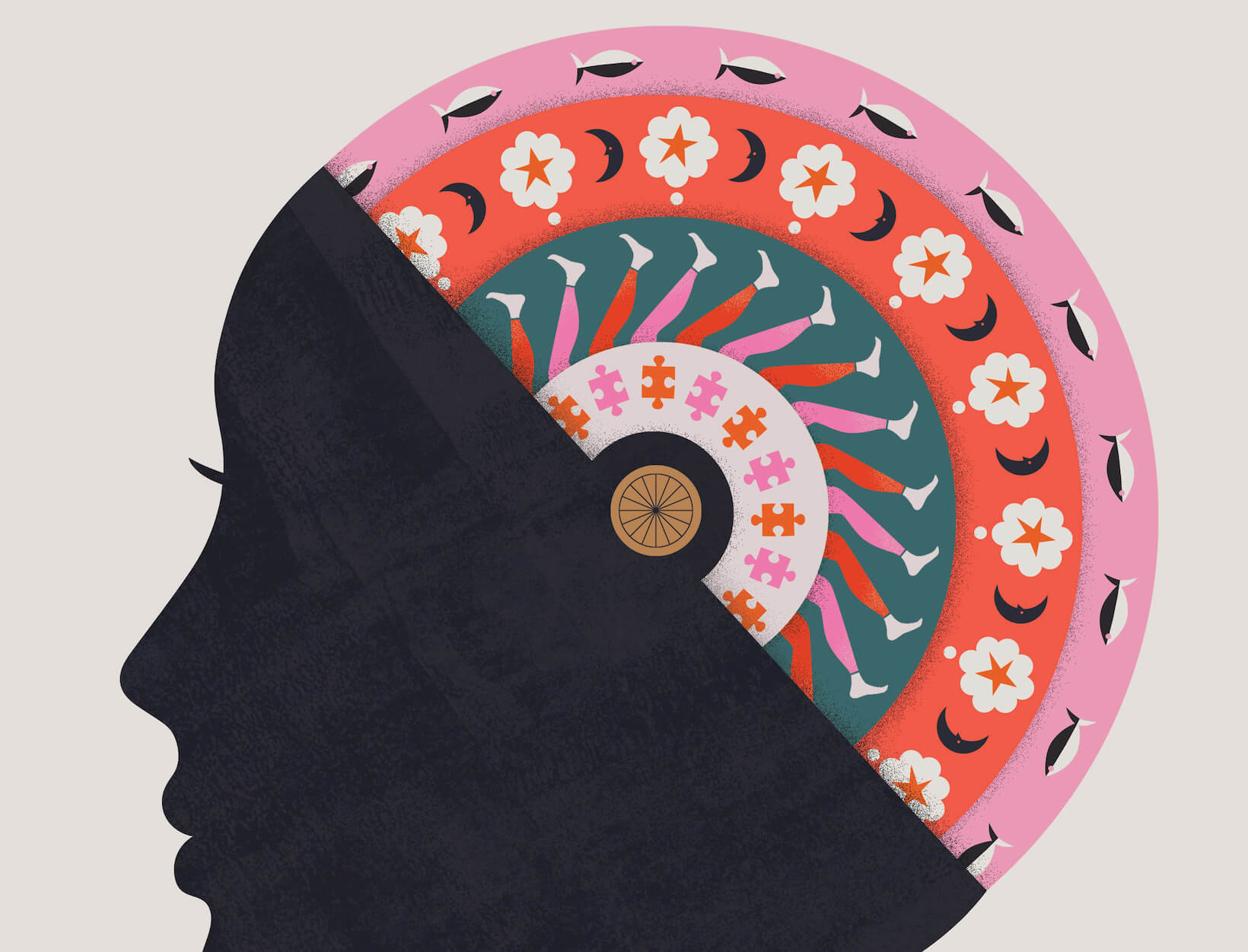
    Illustration courtesy of Vicki Turner
    It is possible to improve learning, reasoning, and memory as your brain ages. But if you’re devoted to your daily crossword puzzle in the hopes that it alone will keep you sharp, it really doesn’t work that way. Researchers say there’s no silver bullet for improving cognition. “It’s not just about crossword-puzzle-solving,” says Anja Soldan, PhD, an associate professor of neurology at John Hopkins University, who is currently working on a research study on how the brain ages. “Exposing yourself to new things, new ideas, new experiences—that’s beneficial.”
    Creating novel experiences can help build what scientists call your cognitive reserve. It’s hard for them to define, but as the name suggests, it’s like backup mental activity. As the structure of your brain (including the cerebral cortex, specific brain regions, and white matter tracts that connect areas of the brain) starts changing and possibly shrinking with age and plaques and tangles potentially begin to develop, more cognitive reserve gives your brain resilience that allows it to continue to function well, even when its physical structure isn’t at its best.
    The concept of cognitive reserve comes from a 1989 study of autopsy results of older women. They were considered cognitively healthy at the time of their deaths, yet their brains had many plaques that are seen in people with advanced Alzheimer’s disease. Scientists attributed the discrepancy between the women’s physical brains and their cognitive health to some type of reserve that allowed them to compensate for the changes in their brain.
    Building Cognitive Reserve
    What creates cognitive reserve? “We don’t have a good understanding yet,” Soldan says. “We are only starting to get an understanding of what’s happening in the brain that allows someone to have what we think is more reserve than somebody else.” It could be anything from the size of a person’s brain to an increase in brain connectivity because of how engaged they have been throughout life. “We think it has to do with how we process tasks in our brain, how we solve problems, how we remember—those cognitive processes are probably more resilient in some people than in others,” says Yaakov Stern, PhD, a professor of neuropsychology at Columbia University.
    Research shows that the things that are generally healthy for your brain are probably helpful in building your cognitive reserve, including:
    Education. Studies show that people who have more years of education have a reduced risk of developing dementia and other age-related cognitive decline, compared to those with fewer.
    Leisure and social activities. “There are studies suggesting that greater engagement in activities that are cognitively, socially, or physically stimulating is beneficial,” says Soldan. In one study, people who spent time with friends or family, reading, going out to restaurants or to see a movie, walking, or vacationing were less likely to develop dementia later in life.
    Stimulating work. A study showed that people with more complexity in their work—anything that involved decision-making, problem-solving, creative thinking, or coaching or mentoring others—were less likely to experience rapid cognitive decline during retirement.
    A balanced diet. Research shows that a balanced diet—plenty of veggies, fruits, beans, nuts, whole grains, and healthy fats—may benefit cognitive function later in life. Creating a balanced diet with your lifestyle and food preferences in mind is key.
    Bilingualism. Learning a second (or third or fourth) language may help build cognitive reserve, too, but experts say that the research is conflicting on bilingualism. Some studies find it beneficial, while others don’t. It likely depends on how well the person knows the second language, how often they use it, and whether they frequently switch back and forth. Either way, it doesn’t hurt to learn another language.
    Scientists aren’t yet sure how these behaviors potentially benefit cognitive reserve, but they could be increasing brain connectivity by improving synchronicity of brain regions, strengthening neuronal connections, or improving neurotransmitter functioning.
    So if you must finish your daily crossword puzzle, do it because you enjoy it. “You hear a lot about brain training or doing crossword puzzles [for cognition], but I don’t think there’s any one magic activity,” Stern says. The key is being engaged—physically, cognitively, and socially—throughout life.

    THE WELLNESS SHOP

    Related Reading

    Eating to Combat Brain Fog

    Dopamine Fasting: A Misleading Name but a Powerful Protocol

    Understanding Your Brain

    This article is for informational purposes only, even if and regardless of whether it features the advice of physicians and medical practitioners. This article is not, nor is it intended to be, a substitute for professional medical advice, diagnosis, or treatment and should never be relied upon for specific medical advice. The views expressed in this article are the views of the expert and do not necessarily represent the views of goop.

    Powered by WPeMatico

  • Redefining Healthy Eating

    Redefining Healthy Eating

    Redefining Healthy EatingWritten by: Maya Feller, MS, RD, CDN | Published on: January 24, 2023 | Reviewed by: Denise John, PhD

    Photo courtesy of Christine Han for Maya Feller
    Maya Feller, MS, RD, CDN, is the author of the new goop Press cookbook Eating from Our Roots. You can see Feller in conversation with Gwyneth on Thursday, February 16—and get your own nutrition questions answered in real time.

    In my nutrition practice, I have come to learn that health exists on a spectrum and healthy eating means something different for each person. But health is often defined by the Anglo-American and Anglo-European cultures, which are global minorities yet dominate and shape the trajectory of how the world thinks about food.

    I’ve done countless searches for the phrase “healthy food,” and I’ve found that the top results include common fruits and vegetables, the occasional brown rice bowl, and a plate filled with nicely charred grilled meat, whole grains, and leafy greens. These images are usually followed by a list of “the top 10 healthy foods,” which include more fruits, vegetables (usually greens), and whole grains. Yes, these foods are absolutely nourishing, have wonderful health benefits, and should be a part of a pattern of eating. But they lack diversity in terms of the types of foods presented, how they are prepared (or not), and the spices and flavors used with them (or lack thereof).

    Observing these search results, I find myself asking: How did these foods become the gold standard for health? What if someone doesn’t like these types of foods? What happens when the nourishing meals that a person grew up eating are not included in these searches? As a health care professional, I know that there is an abundance of healthy and nourishing foods that look and taste very different from the purported wellness gold standard. There is plenty of space at the proverbial table (and on one’s plate) for a wide variety of foods from cultures around the world. Some of these foods, often representing historically marginalized ethnic groups, are included in my book Eating from Our Roots.

    Maya Feller Eating from Our Roots Bookshop, $27.90 SHOP NOW

    In my practice, we focus on expanding the nutritional discussion to encourage the inclusion of new and familiar flavors and textures, without judgment. We remove the morality around eating and take the whole person into consideration when adjusting patterns of eating. And we applaud reinstating the kitchen as a source of joy and a place that provides nourishing, flavorful foods. As a result, my patients experience less shame and guilt when eating and have a better relationship with food and their bodies. Some principles we work from at Maya Feller Nutrition include:

    Honor your food preferences. It’s best to honor your individual likes and dislikes while taking your current health into consideration. If the act of eating becomes a chore, then shopping, cooking, and eating turn into a bore. My clinical experience has taught me that when a person looks forward to a nourishing meal, especially one that they enjoy, they are more likely to replicate that experience. Ask yourself: Do you enjoy eating the food that is on your plate?

    Make space for heritage foods. You are the expert in your lived experience, and it shouldn’t be any different when developing, customizing, or deepening your pattern of eating. The foods that are representative of your culture, heritage, and ethnicity should always have a place on your plate. Perhaps you grew up eating plantains and cassava but not potatoes. Or maybe your family preferred currants instead of raisins. Perhaps mung beans are more familiar to you than navy beans. There is space for the inclusion of these and many other foods that don’t make it into the gold standard of healthy eating. If you’ve removed your heritage foods from your pattern of eating, welcome them back with fervor and open arms.

    Don’t forget the flavor. We often focus on infusing animal proteins with flavor, through marinades or rubs, and serve them as the center of the meal. If you do the same with vegetables, they can be just as delicious. Nonstarchy and starchy vegetables, grains, beans, nuts, and seeds are great in their unadulterated state, but when tastefully seasoned, they become absolutely incredible. A spice mix of turmeric, cumin, black pepper, and ginger can transform a roasted cruciferous vegetable side dish into the star of your plate—and potentially transport you to your favorite destination, as spices often do.

    GET THE COOKBOOK

    This article is for informational purposes only, even if and regardless of whether it features the advice of physicians and medical practitioners. This article is not, nor is it intended to be, a substitute for professional medical advice, diagnosis, or treatment and should never be relied upon for specific medical advice. The views expressed in this article are the views of the expert and do not necessarily represent the views of goop.

    We hope you enjoy the book recommended here. Our goal is to suggest only things we love and think you might, as well. We also like transparency, so, full disclosure: We may collect a share of sales or other compensation if you purchase through the external links on this page.

    Powered by WPeMatico

  • 3 Wedding Looks for the Winter Bride

    3 Wedding Looks for the Winter Bride

    3 Wedding Looks for the Winter BrideCreated with Van Cleef & ArpelsWritten by: Amanda Chung | Published on: January 24, 2023Fashion editor: Caroline Griswold

    Photo courtesy of Forged In The North

    Venue: booked. Invitations: mailed. Wedding makeup: tested. You’ve put off buying a wedding dress for long enough—it’s time to get serious. While you can certainly head to your local bridal salon, we’re here to remind you that the internet exists, and trying on options at home doesn’t require braving the elements. Below, three beautiful bridal looks for three different winter wedding scenarios.

    CITY

    If you’re headed to the courthouse, you can’t go wrong with a little white blazer dress. Dress it up with crystal-embellished pumps, the diamond collar you debuted at the engagement party, or a metallic bag tucked under your arm. Since it’s a daytime affair, it’s best to keep the makeup natural and glowy—our beauty team has tips for that here.

    Ice Is Always Nice

    Van Cleef & Arpels
    necklace
    Van Cleef & Arpels, price upon request
    SHOP NOW

    Rehearsal Dinner Ready

    Toteme
    dress
    goop, $680
    SHOP NOW

    Eye Do

    ROEN
    eye shadow
    goop, $49
    SHOP NOW

    Arm Candy

    What Goes Around Comes Around
    chanel bag
    goop, $6,950
    SHOP NOW

    Something Blue

    G. Label by goop
    Cabalo Faux-Fur Cape
    goop, $745
    SHOP NOW

    Courthouse Chic

    Carolina Herrera
    minidress
    Net-a-Porter, $3,065
    SHOP NOW

    Get Off on the Right Foot

    Mach & Mach
    heels
    Moda Operandi, $1,045
    SHOP NOW

    Lady in Lace

    Sleeping with Jacques
    slip dress
    goop, $419
    SHOP NOW

    Marriage (License) Material

    Montblanc
    fountain pen
    Montblanc, from $660
    SHOP NOW

    Band Together

    Van Cleef & Arpels
    wedding band
    Van Cleef & Arpels, price upon request
    SHOP NOW

    Sealed with a Kiss

    Saie
    lipstick
    goop, $24
    SHOP NOW

    MOUNTAINS

    Lean into the drama of your environment—the breathtaking vistas, the snow-dusted peaks, clear blue skies stretching out in every direction—with a long, fluttery dress that swishes gently around your cowboy-boot-clad feet. Western accessories, plus diamond flower earrings for a touch of sparkle, drive the look home.

    Ring It On

    Van Cleef & Arpels
    solitaire
    Van Cleef & Arpels, price upon request
    SHOP NOW

    For the Sunday Send-Off

    Proenza Schouler White Label
    cardigan
    goop, $495
    SHOP NOW

    Proenza Schouler White Label
    skirt
    goop, $395
    SHOP NOW

    A Love Lobe That Lasts

    Van Cleef & Arpels
    earrings
    Van Cleef & Arpels, price upon request
    SHOP NOW

    Special Spritz

    Maison Louis Marie
    perfume
    goop, $65
    SHOP NOW

    Give It a Twirl

    Khaite
    dress
    Net-a-Porter, $2,900
    SHOP NOW

    Best Boot Forward

    Chloé
    boots
    Net-a-Porter, $1,250
    SHOP NOW

    Head over Heels

    Janessa Leone
    hat
    goop, $260
    SHOP NOW

    Warm and Fuzzy

    G. Label by goop
    Bloomer Cable-Knit Poncho
    goop, $795
    SHOP NOW

    No Cold Feet

    Toteme
    boots
    goop, $900
    SHOP NOW

    Positively Radiant

    ILIA
    eye cream
    goop, $46
    SHOP NOW

    BEACH

    Having a midwinter destination wedding is the ultimate hack for brides who can’t take the cold. It also allows for more-casual attire, depending on how laid-back you’ve decided to make the event. You could, for instance, wear poplin to the welcome dinner and a dress with cutouts to recite your vows, then slip into a swimsuit (still white, obviously) for a post-reception dip in the pool.

    Best Swishes

    Maygel Coronel
    dress
    Maygel Coronel, $420
    SHOP NOW

    The Mane Event

    GHD Hair
    flatiron
    goop, $279
    SHOP NOW

    In Case of Happy Tears

    Ere Perez
    Waterproof mascara
    goop, $28
    SHOP NOW

    A Vision in White

    Staud
    top
    goop, $275
    SHOP NOW

    Staud
    skirt
    goop, $265
    SHOP NOW

    This Band > Live Band

    Van Cleef & Arpels
    wedding band
    Van Cleef & Arpels, price upon request
    SHOP NOW

    Sole Mates

    Emme Parsons
    sandals
    goop, $495
    SHOP NOW

    Be the Other Flower Girl

    Cara Cara
    skirt
    goop, $395
    SHOP NOW

    Sparkle Joy

    Van Cleef & Arpels
    earrings
    Van Cleef & Arpels, price upon request
    SHOP NOW

    Make a Splash

    BONDI BORN
    swimsuit
    goop, $275
    SHOP NOW

    It’s Handled

    Cult Gaia
    Tote
    goop, $498
    SHOP NOW

    In the mood for love? Shop our Valentine’s Day Gift Guide.

    Related Reading

    Editors’ Picks: A Wedding Gift Guide

    10 Makeup Tricks for Weddings That Are Worth Stealing for Real Life

    Ask Jean: Best Wedding Makeup for Hot Weather?

    We hope you enjoy the products recommended here. Our goal is to suggest only things we love and think you might, as well. We also like transparency, so, full disclosure: We may collect a share of sales or other compensation if you purchase through the external links on this page.

    Powered by WPeMatico